It was so terribly cold. Snow was falling, and it was almost dark. Evening came on, the last evening of the year. In the cold and gloom a poor little girl, bareheaded and barefoot, was walking through the streets.
--------------
These are the first few sentences of Hans Christian Andersen's 'The Little Match Girl', which you can read in full here. I first read it in Belgium on the recommendation of my friend Heathcote and I have just translated the first few paragraphs of it for my written expression class homework. The post's going to weave in and out of a few themes, so stay alert, and if your attention wains, the important bit's under the stars~
As you know, and as the logo of this blog regularly reminds, I have been campaigning with the Communist Party of Japan. Everyday in the newspapers we are presented with politics as political, that is, the ins and outs of party politics, what Cameron said about Brown, which policies are directed to which voter block, which way the polls are pointing. Far more interesting to me is the relationship between politics and culture, and indeed it is very likely that my dissertation next year will explore Japanese modernist literature through the lens of Zizekian cultural criticism to explore the underlying messages and politics or the Japanese liberal intelligentsia on the brink of Japan's decline into Fascism. And I get pleanty of high brow academic politics with the JCP, whether it's discussing constitutional systems, the differing international meanings of Trotskyism or whether Japan truly experienced 'democracy' before the war. But as a person who is prone to thinking too much, to over-rationalising things, to neglect the practical in favour of the theoretical, I am grateful to the JCP for awakening in me that relationship which is so often overlooked, but yet is the most essential, which is that between politics and people.
Every Saturday, from 10PM to around 11:30 the JCP, together with the wider 反費困 - Anti Poverty Campaign go to the south side of Kyoto station and give food and clothes to the homeless. I've been going the last couple of weeks and intent to go whenever possible. It is a practical, humanitarian ethos that the JCP have revealed time and again in the short time I've campaigned with them. Beyond feeding the homeless, they conduct 'labour consolations' with young people around Japan, where they interview people on the streets, give advice about finding employment, accessing welfare or joining unions. This also entails getting people to fill in questionnaires about their employment situation (or lack thereof...) which are relayed to the welfare office so that welfare and employment policy can better meet the people on the street's needs. JCP city meetings are just as likely to what a certain homeless person likes to eat, or safe places for someone to get changed, as they are to talk about policy and election campaigns. The only other political party who dealt with issues in such a grassroots way that I can think of (though as a strictly non-violent party the JCP would surely dismiss the comparison) is the Black Panther Party and their Free Breakfast for Children program which attempted prove the worth of socialist ideology with a working example of a socialised distribution scheme aimed at alleviating hunger in the poor.
Yesterday was the first time I got to meet some of the homeless people the party devote so much attention to. One old man sleeping inside the station was doing better that some others. He had a wife and son in the city, but for reasons he doesn't speak he can't return to them. Owing to his life long work at a nearby market, he had something of a pension and basic health-care coverage. For this, he is still homeless. Another old man has traveled the world, speaks very decent English and still dreams of starting his own business in Hong Kong. For this, he is still homeless. And this seems like as good a place as any to jump into the Japanese welfare system. -
What is readily apparent to foreigners, and widely known about Japan is that it is a hierarchical society with much emphasis placed on one's vertical relationship to one's superiors and inferiors. What is less widely known among the lay-person is that there is also a horizontal axis known as 'in-group, out-group'. This social structure is (traditionally, and it must be stressed that Japan is a country of 130 million people with huge internal cultural and personal variation) so ingrained that it is evident in the grammar of the language, where the Worker A of Company A speaks to Boss A with respectful language that show's the boss' superior position, but when he meets worker B of Company B, Worker A will talk about Boss A with humbling language, because in the face of an outsider, Company A operates and one unit, one in-group regardless of the hierarchy within it. To do otherwise is not simply a faux-pas but is actually grammatically incorrect.
These relations are repeated in the economic structure. The first barrier against poverty is company welfare. This is the security system that ensures that those who work stable, full time, unionised jobs will, in return for working all out for long hours, be looked after, financially, legally, whatever. This privatised welfare system served Japan very well during the boom years, but now more and more people are working unsteady, part time, un-unionsed jobs, where they can be fired at a day's notice and have nothing in the way of a pension or health coverage.
Where company welfare fails, what is known as family welfare is often expected to pick up the slack. Here is where people borrow money from, or move in with parents, aunts and uncles, brothers and sisters.
If you have a good job, and you have a good family, you are in the in-group. But as the presence of these English speaking, well educated homeless people shows, in this economic climate, people who were once 'in' have found themselves 'out' and this is where public welfare must step in. Increasingly the government is willing to play a role in protecting those who need it most. Though health-care isn't free (it is a universal system with the patients paying 1/3 of the costs), there is assistance for the poorest. Across the nation is the Living Assistance scheme, which provides the very poorest with a variety of monies for everything from money to buy nappies, to money to pay the rent. Kyoto, being a progressive city, holds days where free health care and check ups are given along with other services. Kyoto's pitiful 18 shelter beds are in fact comparatively high, and the city has negotiated a deal with a hotel with high vacancies to put the homeless up for free in these harsh winter months. All of this takes money, which is paid for by taxes. I have not met any 'welfare scrounges', rather simply people who's very sustenance depends on the public pocket and who are either physically unable to work, or simply unable to find work because they are old. Similarly, behind the tabloids' frequent stories about those who abuse the system, the vast majority of recipients of welfare in Britain are people who would work if they could or if there were any jobs to be found. Food for thought when complaining about taxes.
One can see the system for it's failures and successes. For the welfare offered, there are those who are unable to receive it. Some people literally are unable to walk all the way to the welfare office. Some people find it impossible to wade through the characteristically Japanese bureaucracy involved. Still more are unwilling to take the Living Assistance because of personal pride - an emotional response perhaps difficult to understand for Westerners but beautifully conveyed in the Studio Ghibli classic - Grave of Fireflies. It was touching to see the cycle of one man volunteering with us who had himself been a recipient of the Living Assistance, had got himself an apartment and now works with the Anti Poverty Campaign convincing others that there's no shame in accepting help. But for those who have slipped through all other layers of protection, the JCP and Anti Poverty Campaign are there providing hot rice balls and soup, blankets and socks.
*******************************************************************
Kyoto has very quickly become very cold. The Japanese boast that Japan, unique among nations, has four distinct seasons. Obviously the existence of the four words 'winter, spring, summer, autumn' bare no relation to this theory of Japanese-exceptionalism at all. But sure enough, right on schedule, a mere few days before the first of December the temperature drops to see-your-breath-in-the-air-and-3-jumpers-cold. There is an old woman called Noriko-san who sleeps in front of Kyoto Station. She's tiny and walks very slowly, when she walks, is very quiet but has a sense of humor and know what she likes and what she doesn't. She doesn't like being around people and is reluctant to take up the offer to stay in this hotel for free, though there is progress and week by week we push, we can only hope. She is talked about often and fondly among the volunteers and in official meetings. We gave her soup and rice balls, and her t-shirt and jumper not being anywhere near enough, wrapped her in 3 blankets. She looked sweet as could be, more blanket than body, and as one volunteer said, a lot like a snowman. Warm fuzzy feelings abound, this is what it feels like to save the world.
And then Iida-san, leader of the Kyoto Youth and Student section of the JCP, my go to guy in the party, in the midst of a lot of "isn't it cold" talk drops it. "Isn't it? She could die."
I cycled back home, nose running, scarf wrapped up to the mouth, looking forward to my heated room. She doesn't have a heated room. None of them do. She could die.
So this is my Christmas Appeal -
To my friends in Kyoto I like to get any old items of clothing, or perhaps more realistically a bit of money to buy as many Uniqlo HeatTeq clothes, and blankets as possible to ensure that this winter none of Kyoto's homeless have to die of the cold.
To my friends and family in Britain, I ask you to think of the homeless, and the millions in horrendously substandard housing around the country and donate whatever you can to Shelter, who are a ridiculously brilliant charity who's services are especially needed over these next few months.
If my story's not convinced you, go back to the top and read Andersen's, it's only short, honest.
Big love, sleep safe, tight, and warm.
xxxxxx
Showing posts with label Literature. Show all posts
Showing posts with label Literature. Show all posts
Sunday, 29 November 2009

Monday, 23 November 2009
Topic unknown, author unknown
Though autumn arrives
for all men, I alone plumb
the depths of misery.
The sadness resides, it seems,
not in autumn but in me.
----------------------
That is poem 185 of the Kokin Wakashu (The Anthology of New and Old Poems), a 10th century classic of Japanese poetry (which you can read in Engish translation h-h-h-h-here)! The first few sections of the collection are organized by season, with a vague 'narrative' of familiar seasonal events, such as the arrival of certain birds, or the blooming of certain flowers, to give it a sense of direction.
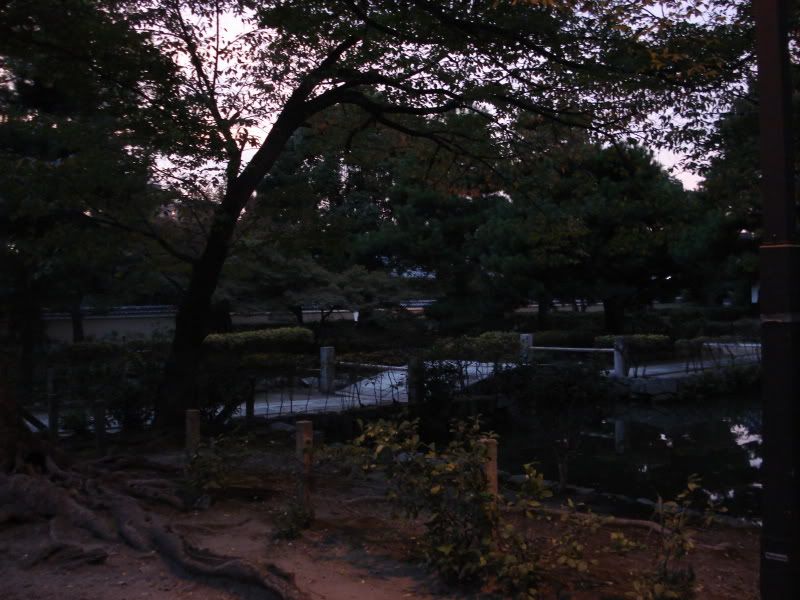
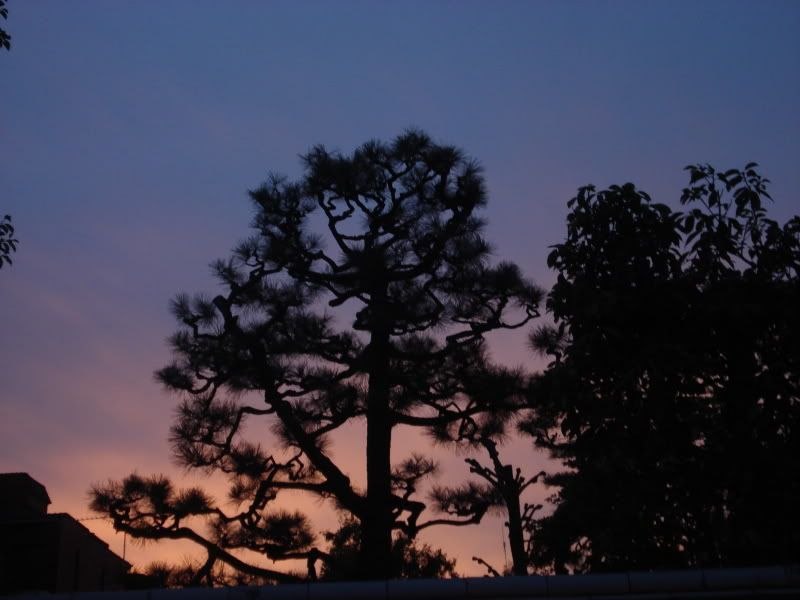
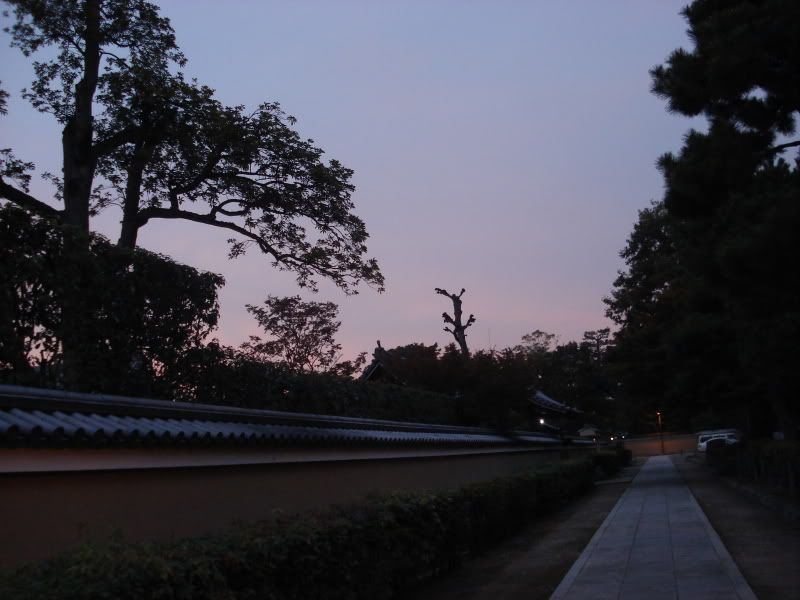
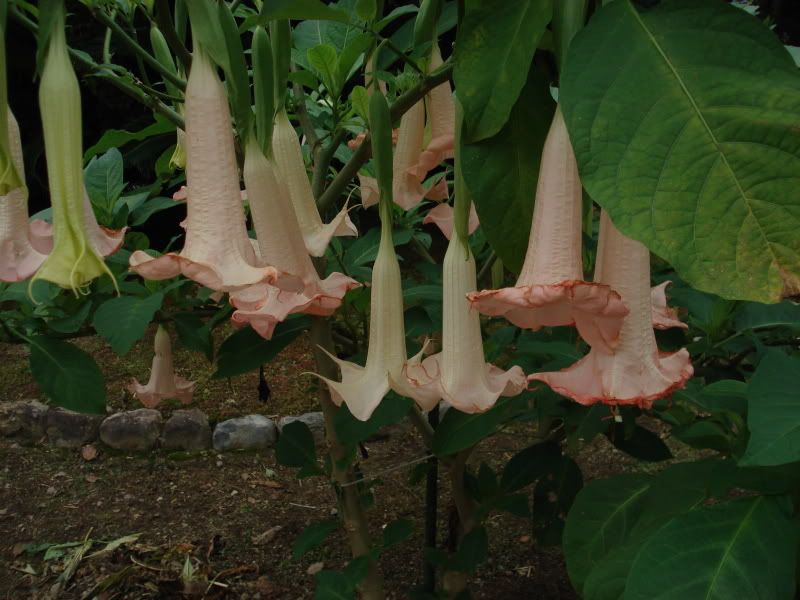
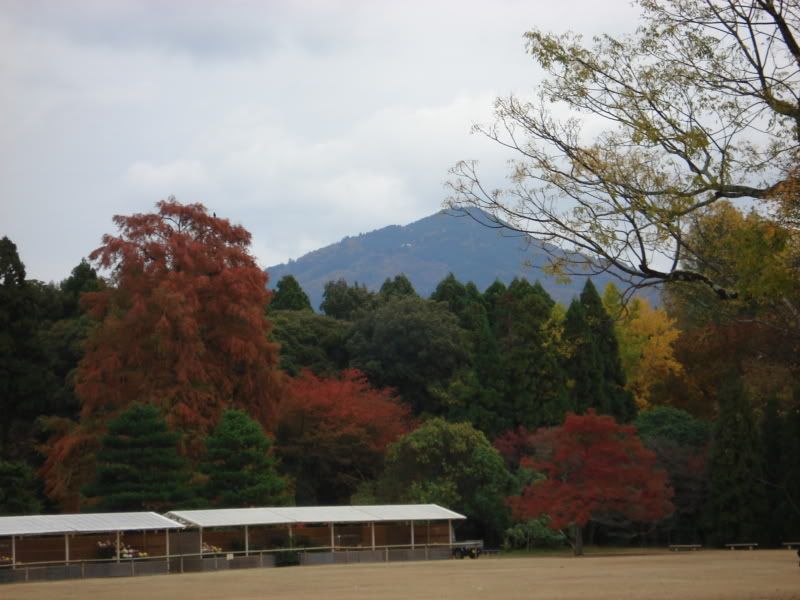
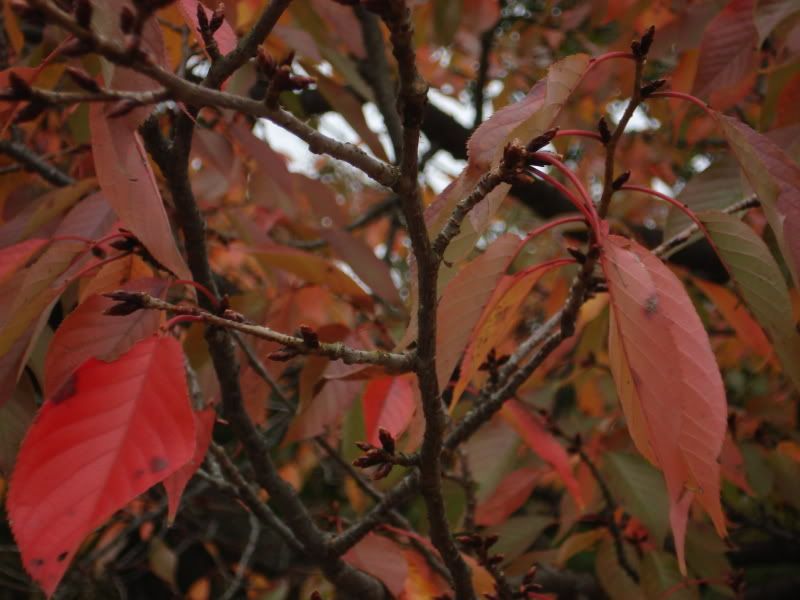
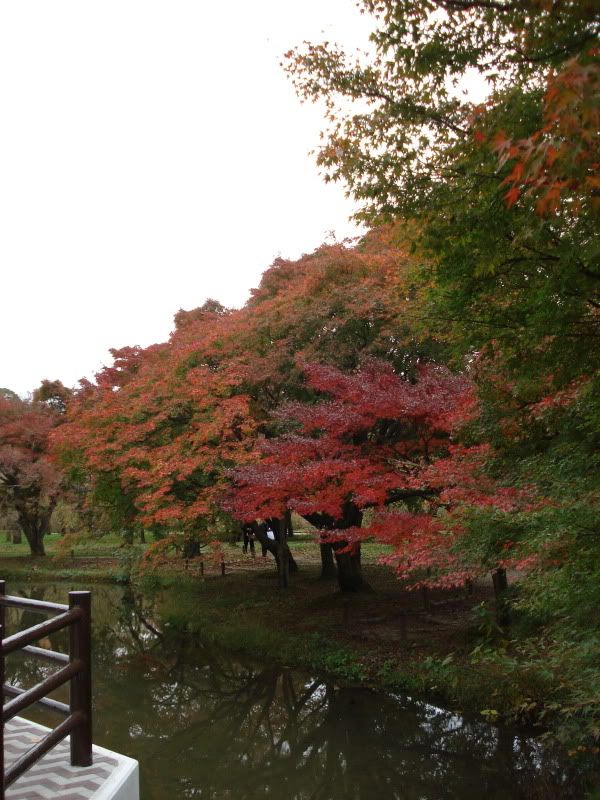
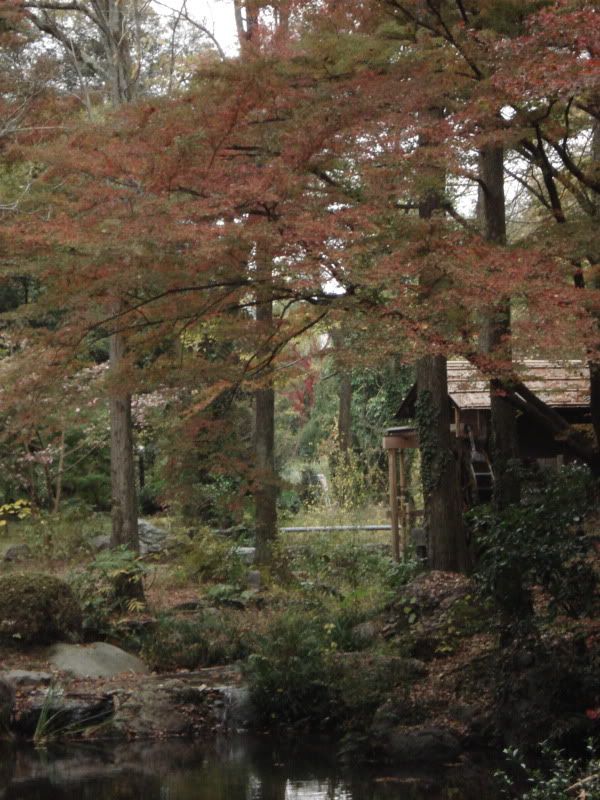
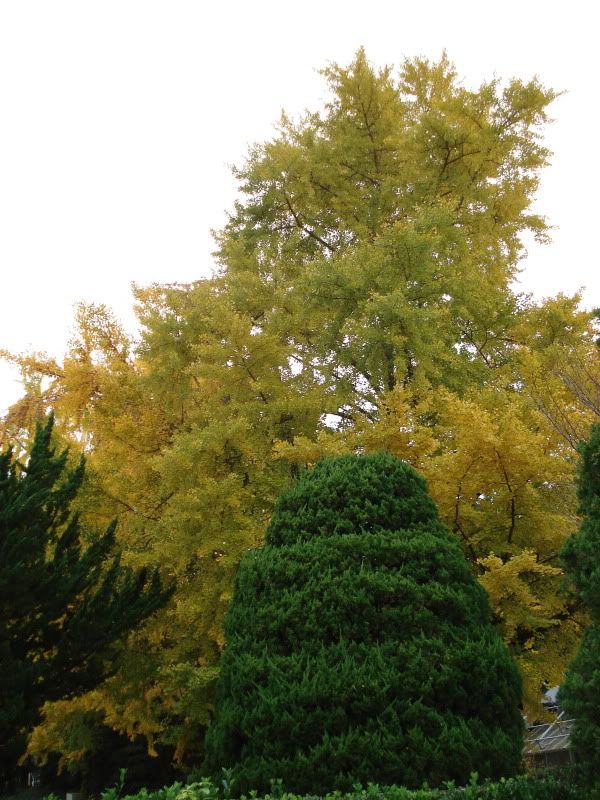
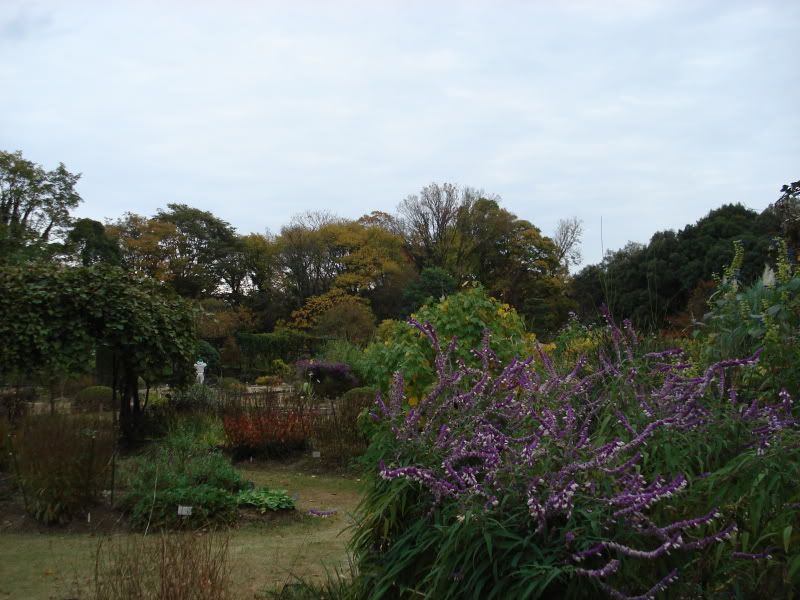
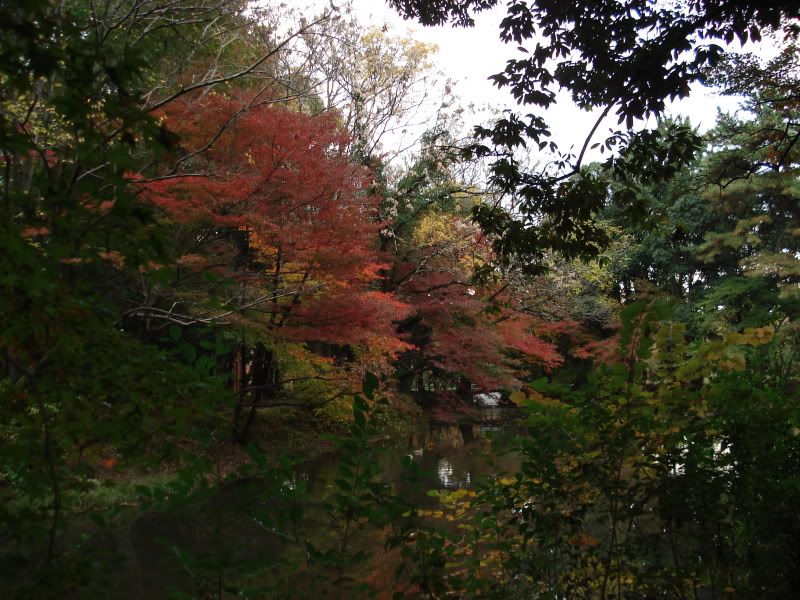
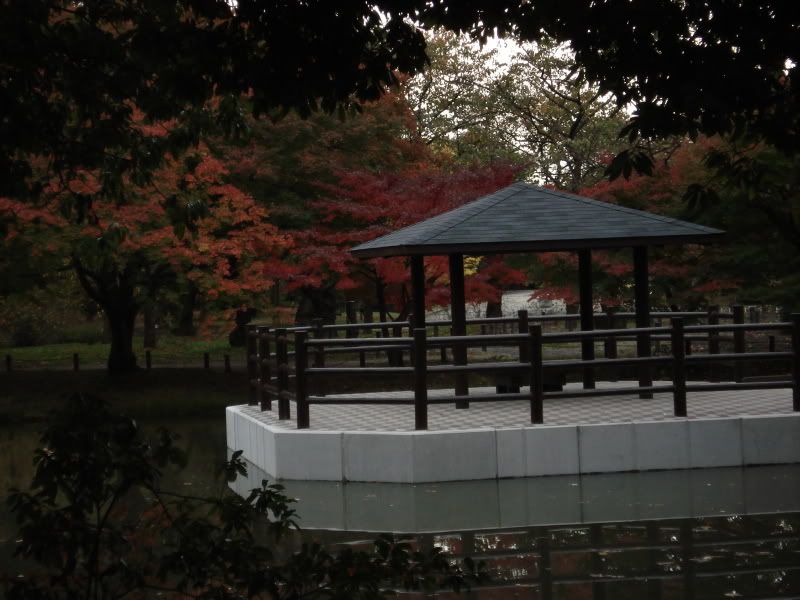
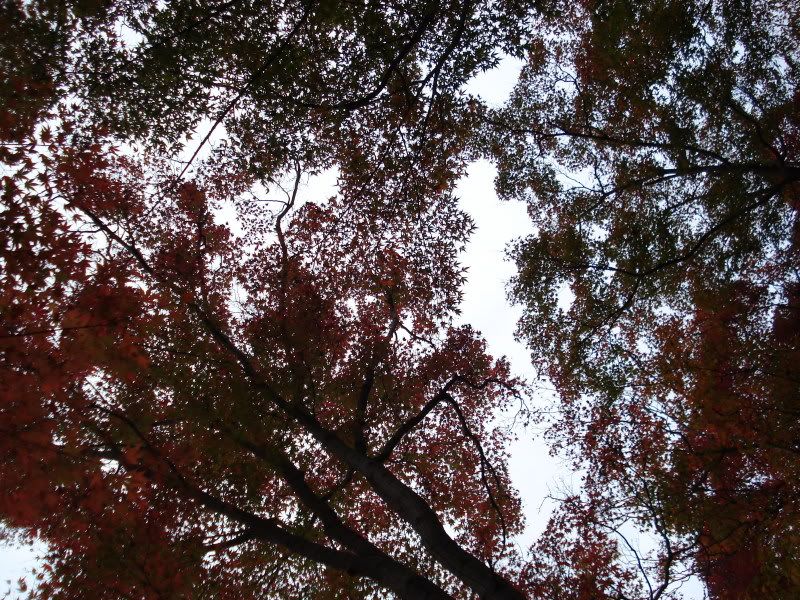
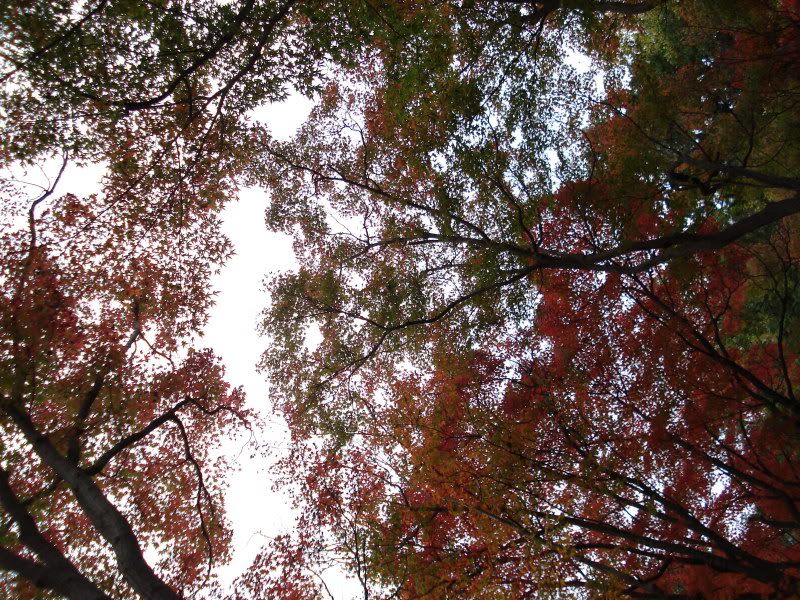
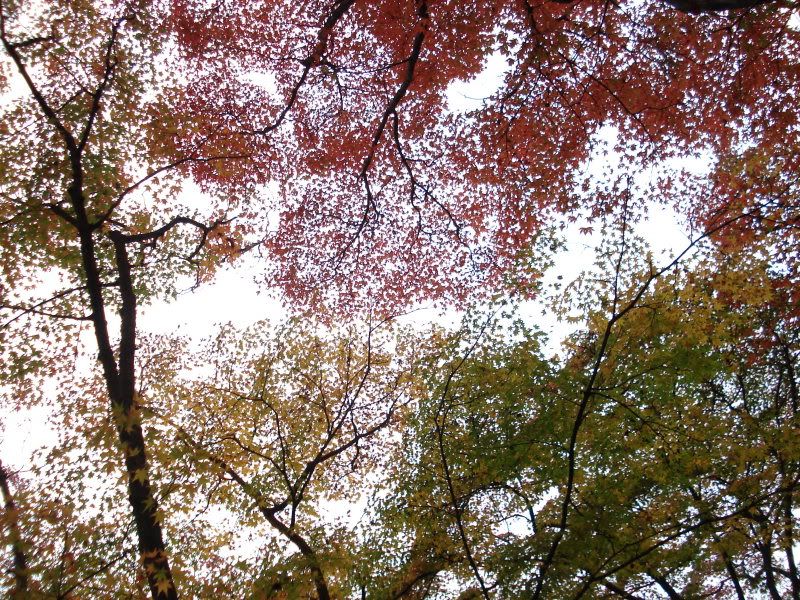
Pervading the collection is a sense of 物の哀れ - mono no aware, which roughly translates as the 'pathos of things' but refers to the tragic beauty in the fact that all things fade. In the Japanese cultural psyche, this feeling is strongly linked with spring cherry blossoms and autumn leaves, which are ssen as all the more beautiful for their brevity. It's a phrase that is loaded with both Orientalist and Nihonjinron connotations, in the case of the former exemplifying how different the Japanese are to other nations, and to how effeminate, pre-modern they are, in the case of the latter proving how different the Japanese are to other nations, and to how much more sensitive, aesthetically refined they are. Few practicing Japanologists would use the phrase without heavy doses of irony or self-awareness (My literature teacher responded to a friend using the term regarding a Japanese film by drawing his fingers into a gun and shooting himself) but it's definitely apparent in everything from the canonical texts of modern Japanese literature to comedy coming-of-age anime/ It's an aspect of Japanese culture I find very attractive, as a person who can feel nostalgia for events as they're unfolding, or even experience nostalgia in anticipation of events that haven't yet happened. But anyway, this is pre-ample, the starting poem is especially, gloriously miserable, and here are some photos of Kyoto being pretty.
I accidentally cycled into a temple and found this sunset.


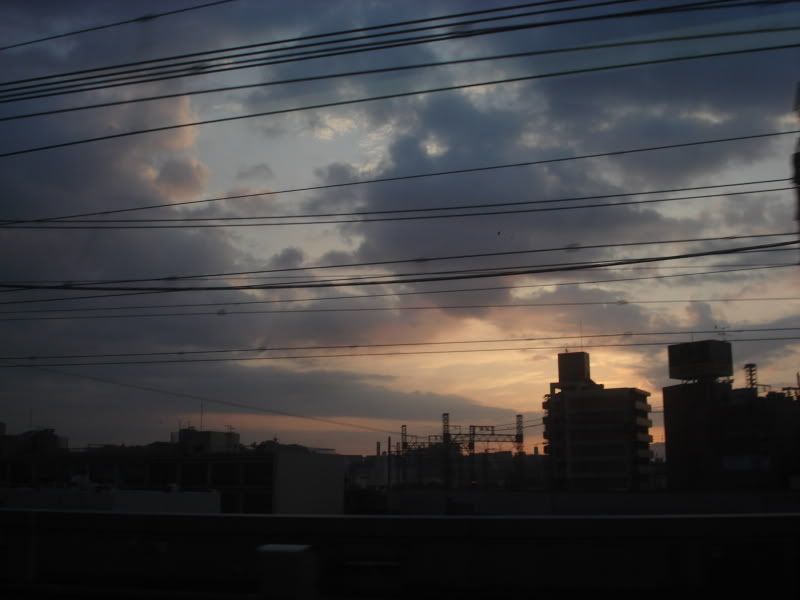
View from the first train after a night out in Osaka.


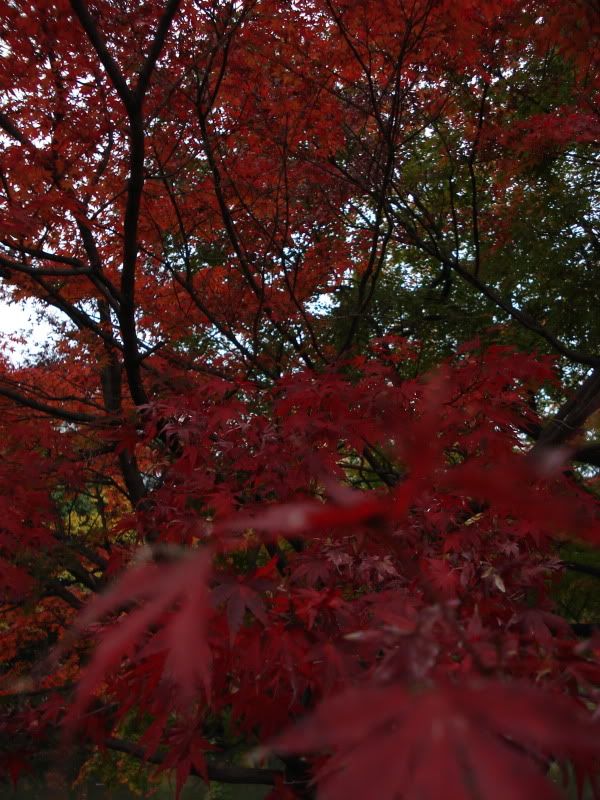
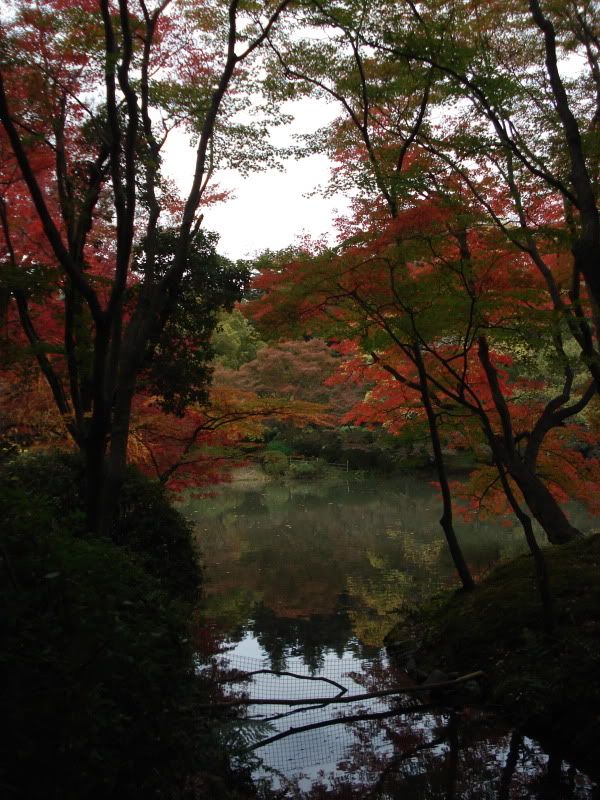
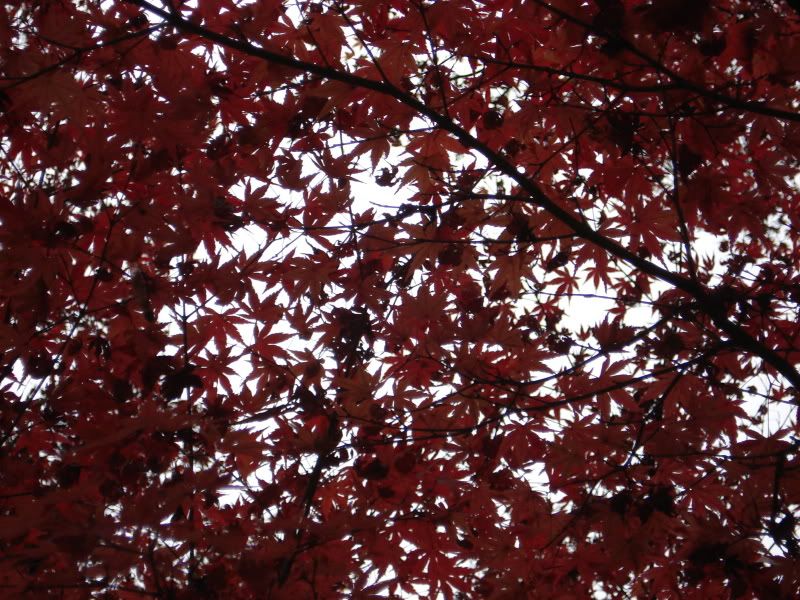
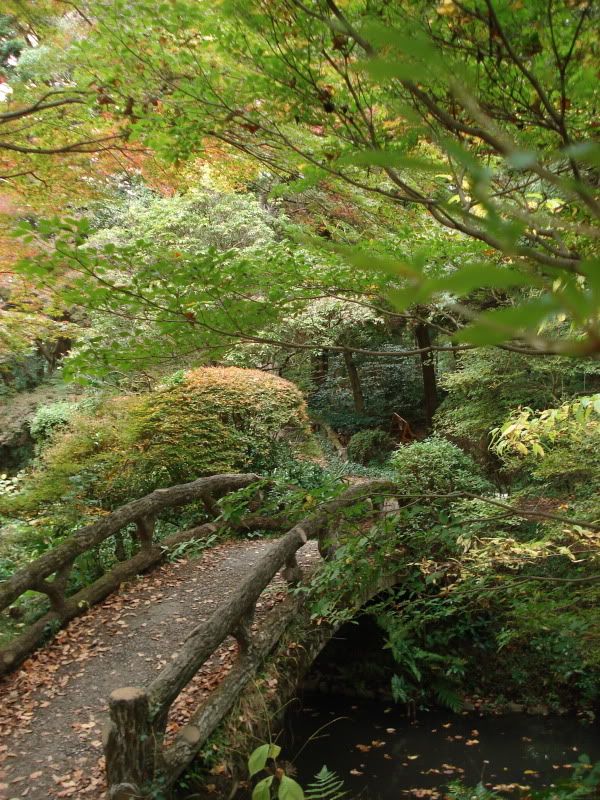
紅葉 - Momiji, Autumn leaves, on an amazing day out to the Kyoto Botanical Garden.


What am I like?

Enjoy! But also cry a bit, and then you too can be mono no aware.
xxx
for all men, I alone plumb
the depths of misery.
The sadness resides, it seems,
not in autumn but in me.
----------------------
That is poem 185 of the Kokin Wakashu (The Anthology of New and Old Poems), a 10th century classic of Japanese poetry (which you can read in Engish translation h-h-h-h-here)! The first few sections of the collection are organized by season, with a vague 'narrative' of familiar seasonal events, such as the arrival of certain birds, or the blooming of certain flowers, to give it a sense of direction.
Pervading the collection is a sense of 物の哀れ - mono no aware, which roughly translates as the 'pathos of things' but refers to the tragic beauty in the fact that all things fade. In the Japanese cultural psyche, this feeling is strongly linked with spring cherry blossoms and autumn leaves, which are ssen as all the more beautiful for their brevity. It's a phrase that is loaded with both Orientalist and Nihonjinron connotations, in the case of the former exemplifying how different the Japanese are to other nations, and to how effeminate, pre-modern they are, in the case of the latter proving how different the Japanese are to other nations, and to how much more sensitive, aesthetically refined they are. Few practicing Japanologists would use the phrase without heavy doses of irony or self-awareness (My literature teacher responded to a friend using the term regarding a Japanese film by drawing his fingers into a gun and shooting himself) but it's definitely apparent in everything from the canonical texts of modern Japanese literature to comedy coming-of-age anime/ It's an aspect of Japanese culture I find very attractive, as a person who can feel nostalgia for events as they're unfolding, or even experience nostalgia in anticipation of events that haven't yet happened. But anyway, this is pre-ample, the starting poem is especially, gloriously miserable, and here are some photos of Kyoto being pretty.
I accidentally cycled into a temple and found this sunset.
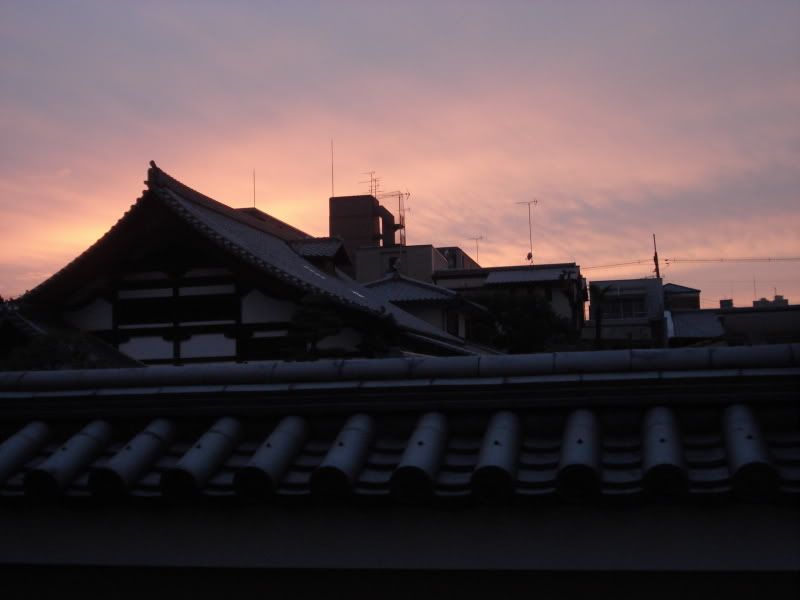
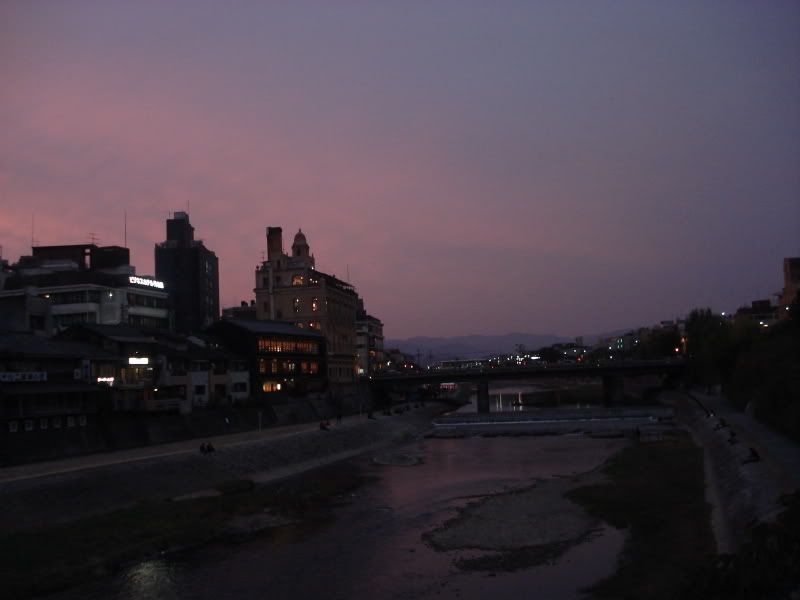
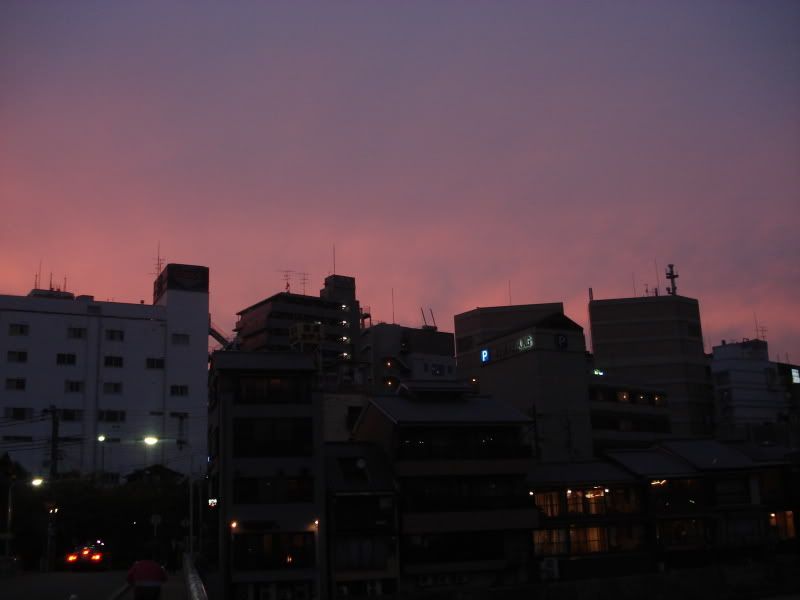
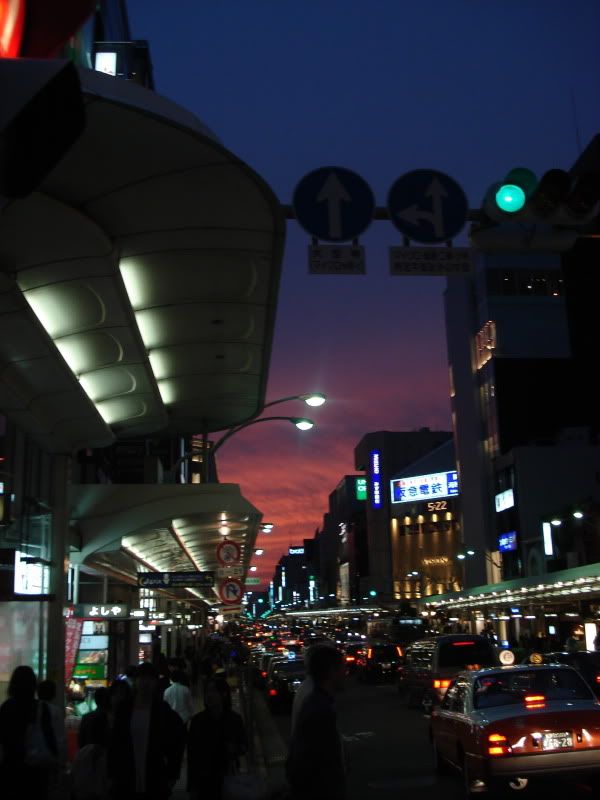
View from the first train after a night out in Osaka.
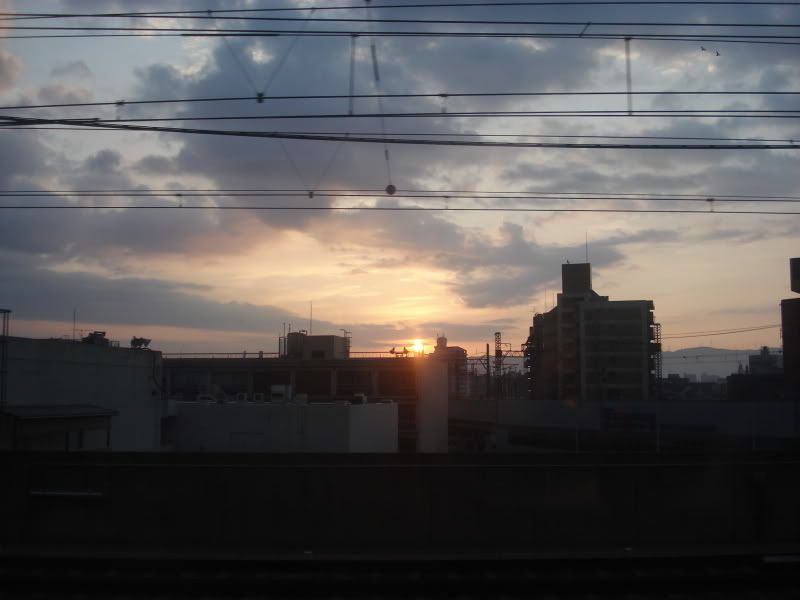
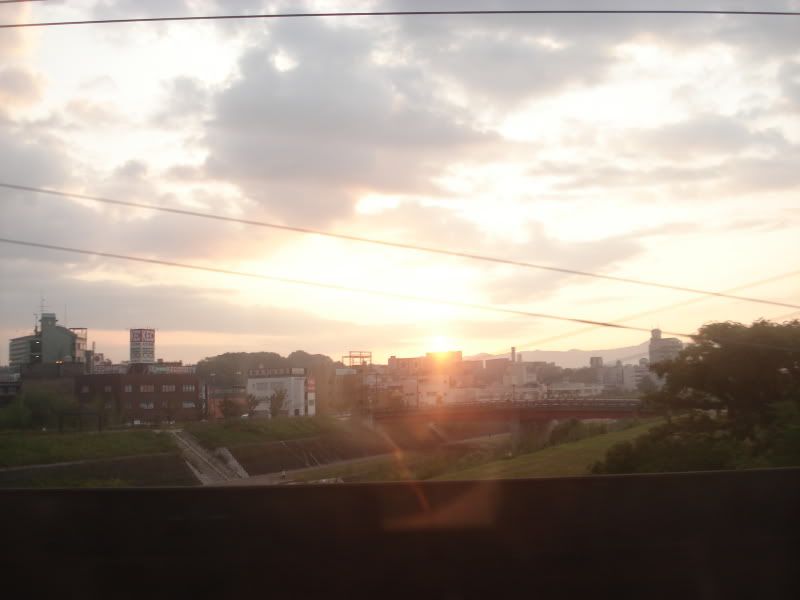
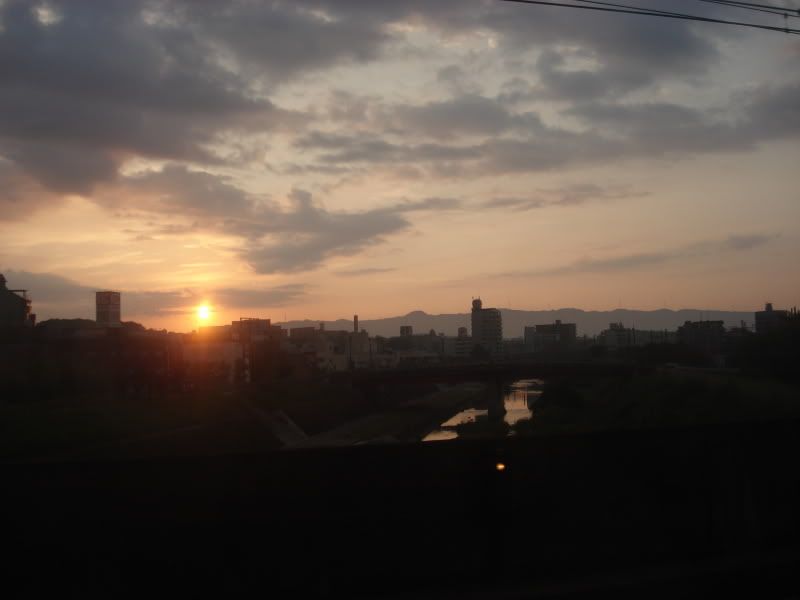
紅葉 - Momiji, Autumn leaves, on an amazing day out to the Kyoto Botanical Garden.
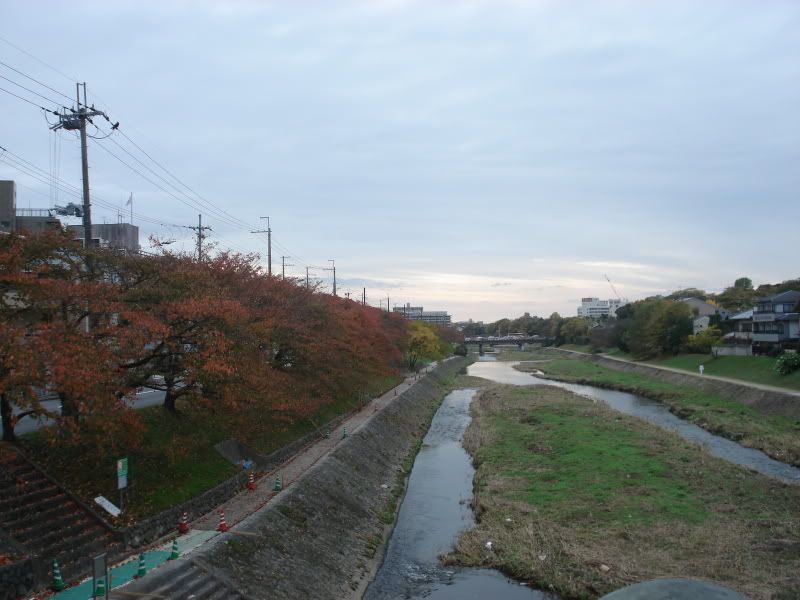
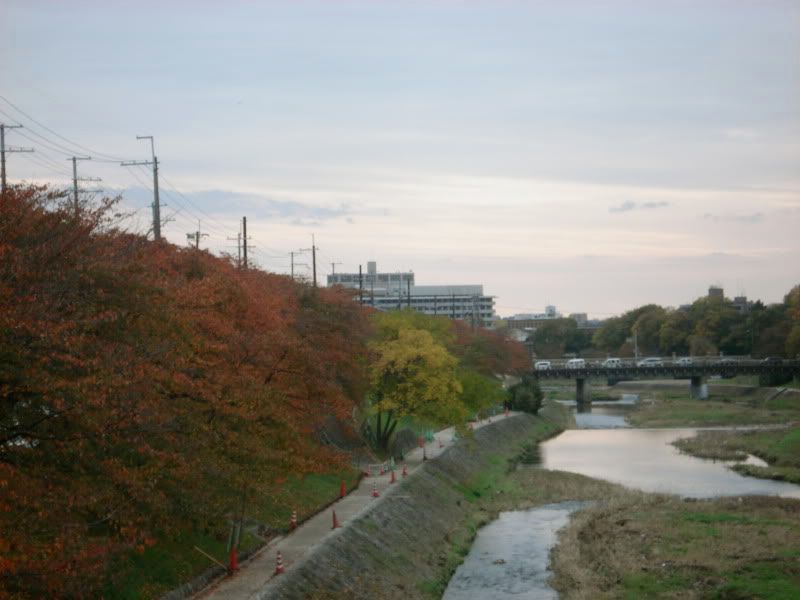
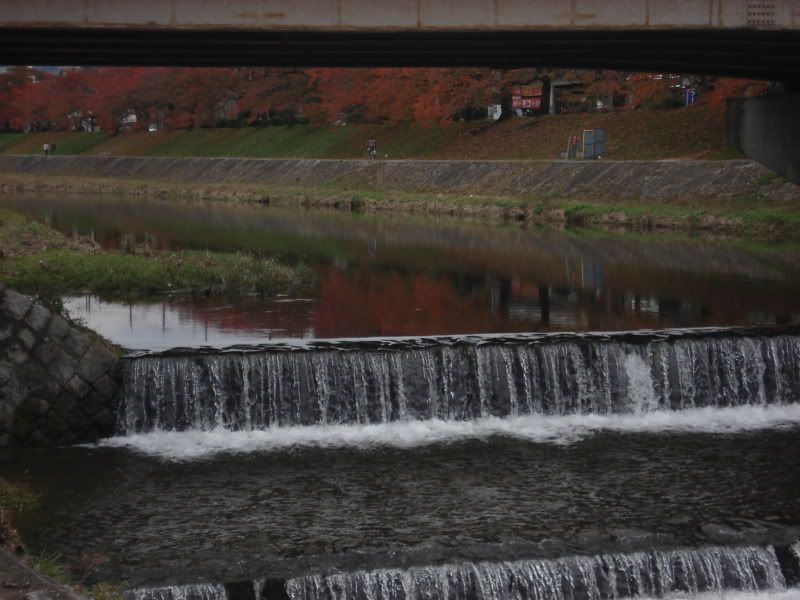
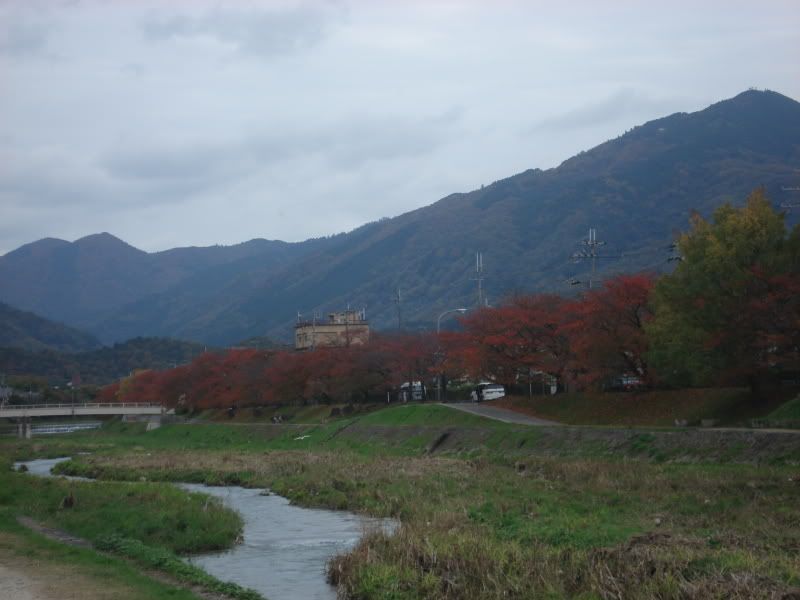
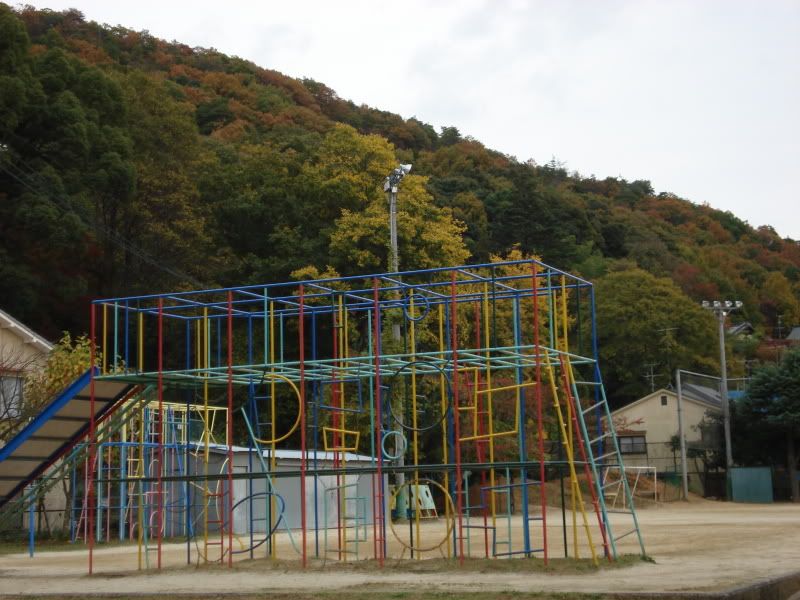
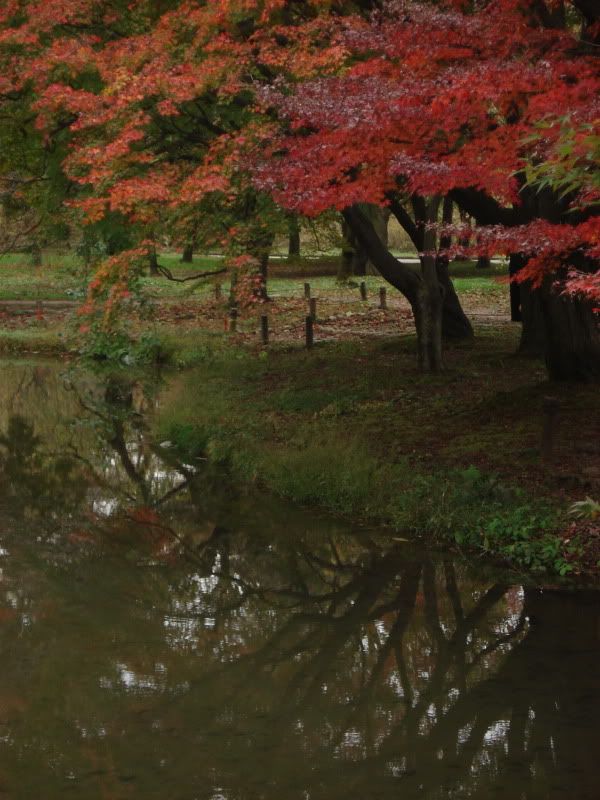
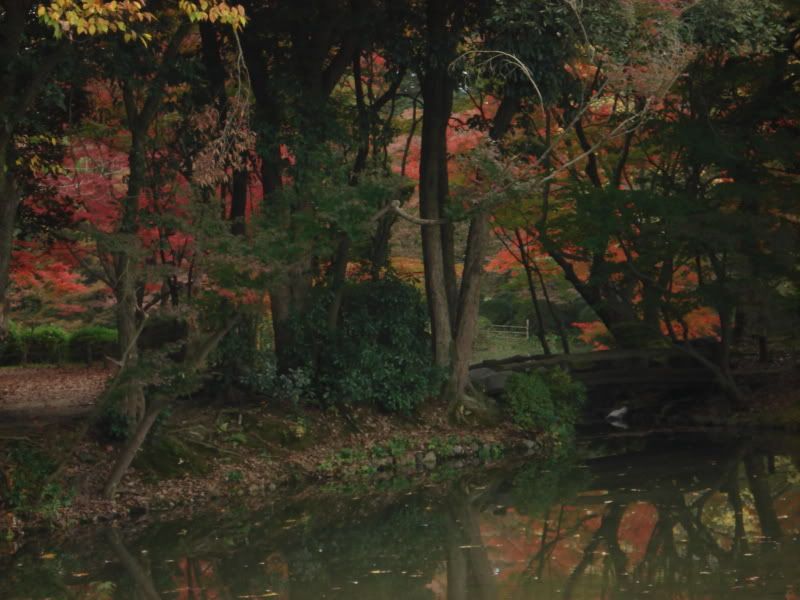
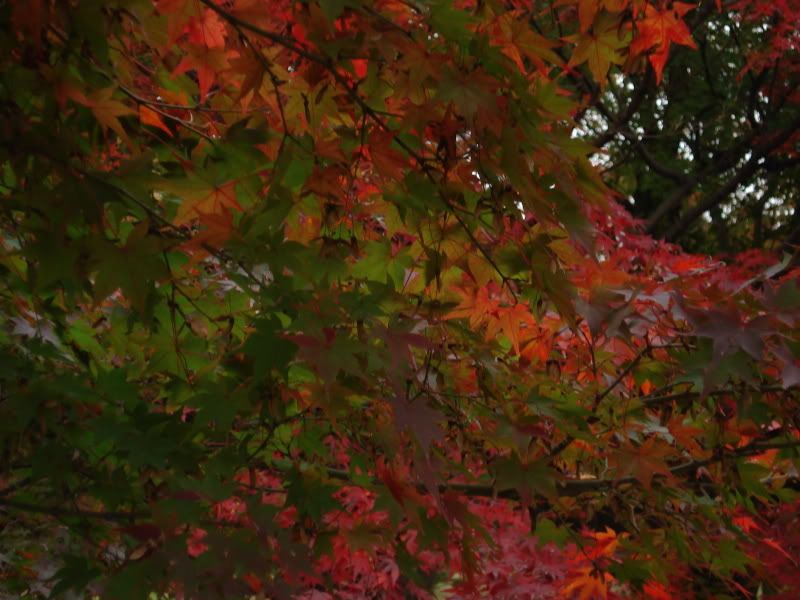
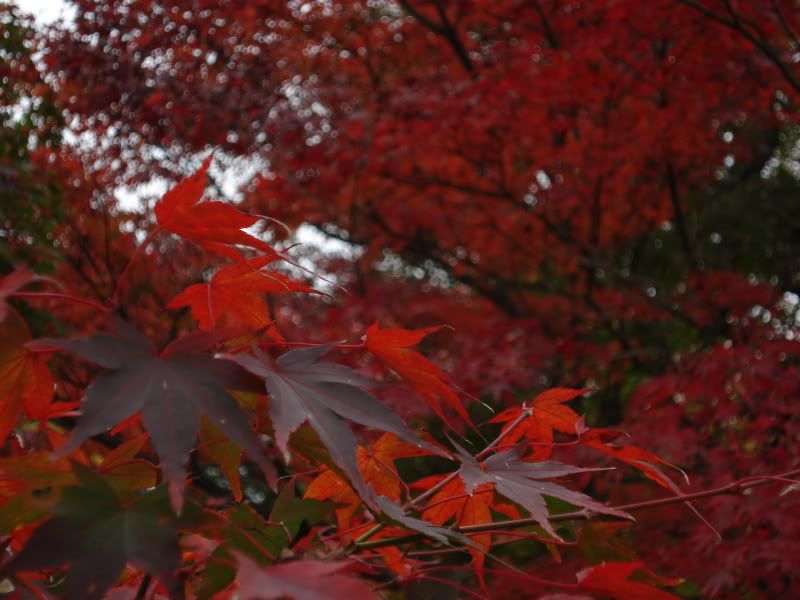
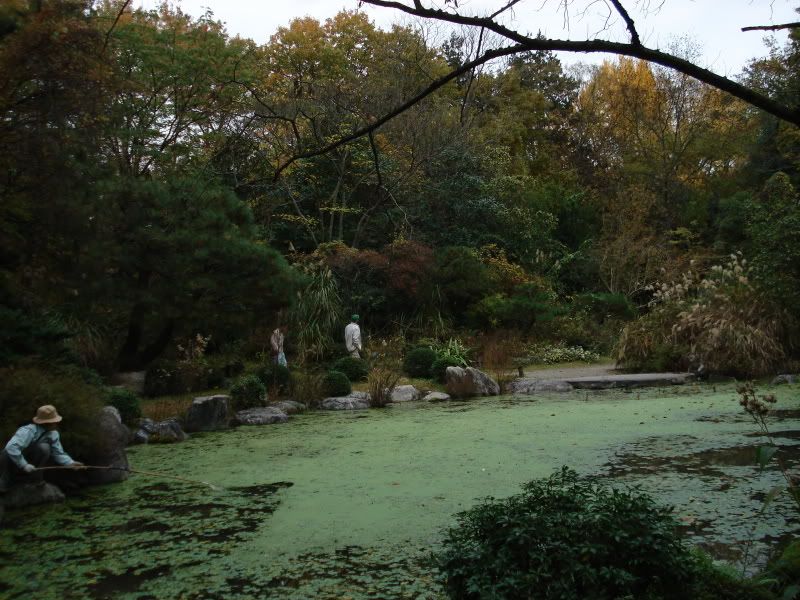
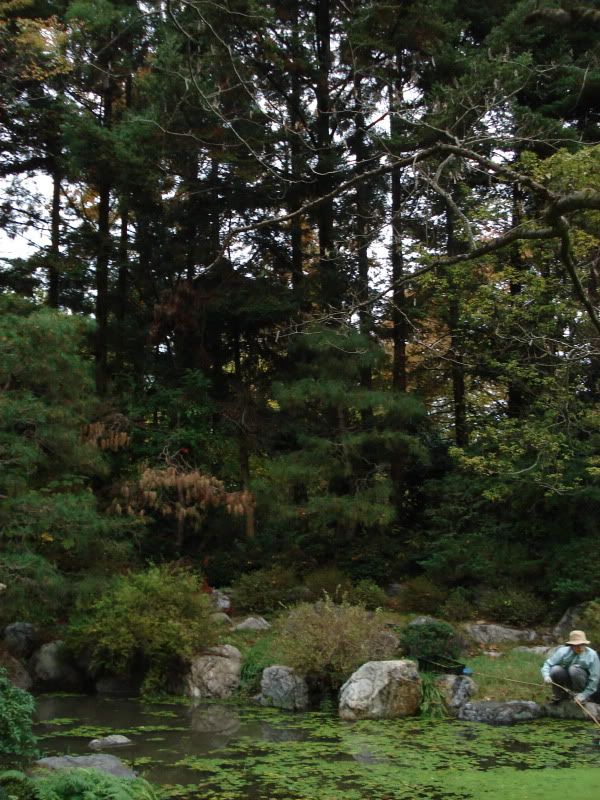
What am I like?
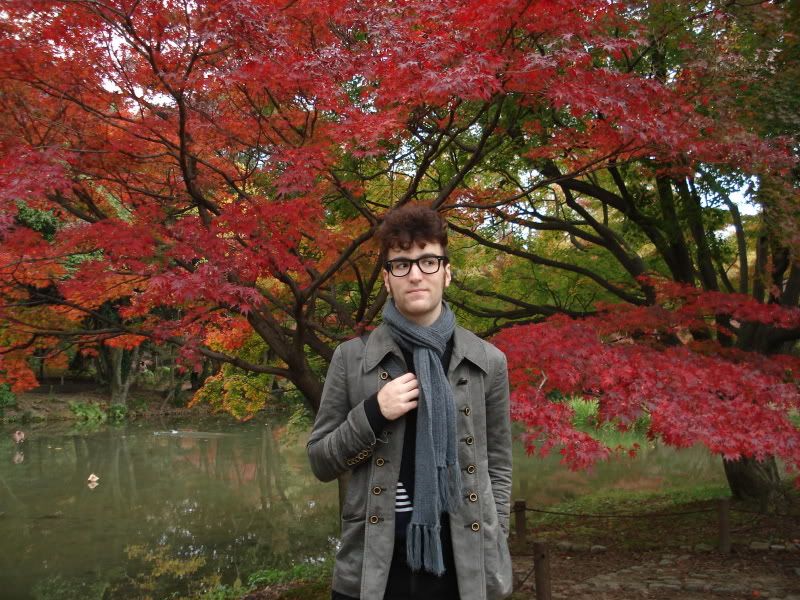
Enjoy! But also cry a bit, and then you too can be mono no aware.
xxx
Sunday, 20 September 2009
You know what they say about Kyoto
Yo. Sorry for the wait, it's been a busy week.
I'm trying to think of how to break the last week or so down. What's my essay structure? Got it.
General happenings:
If I was a terrible person I would describe this last week as "work hard, play hard". But I won't. In the days I've mostly been doing orientation stuff. In the nights I've mostly been doing drinking stuff.
Orientation consists in large parts of the international faculty packing into a lecture hall, being handed fliers and sheets, and then having the fliers and sheets read out to us for the next hour or so. So amongst such thrills as these, if I were forced to choose the keepiest of keepers the best of Orientation Week might include:
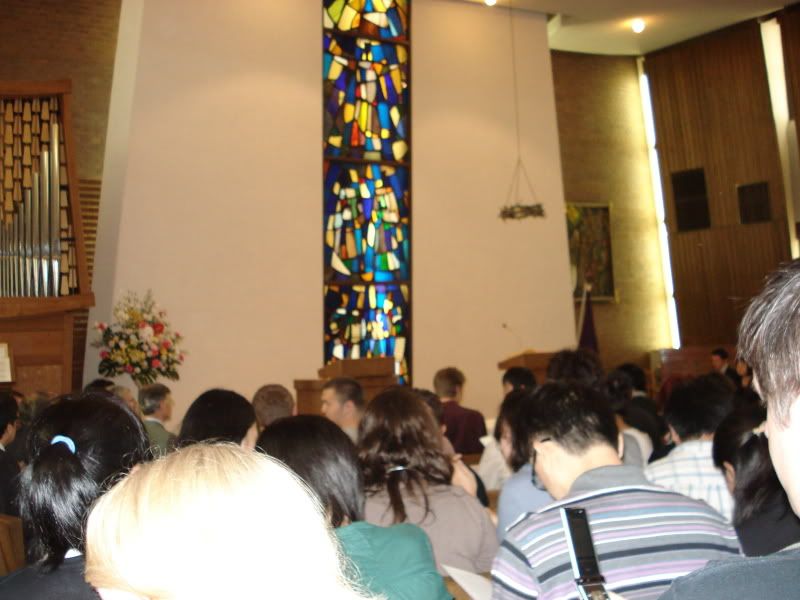
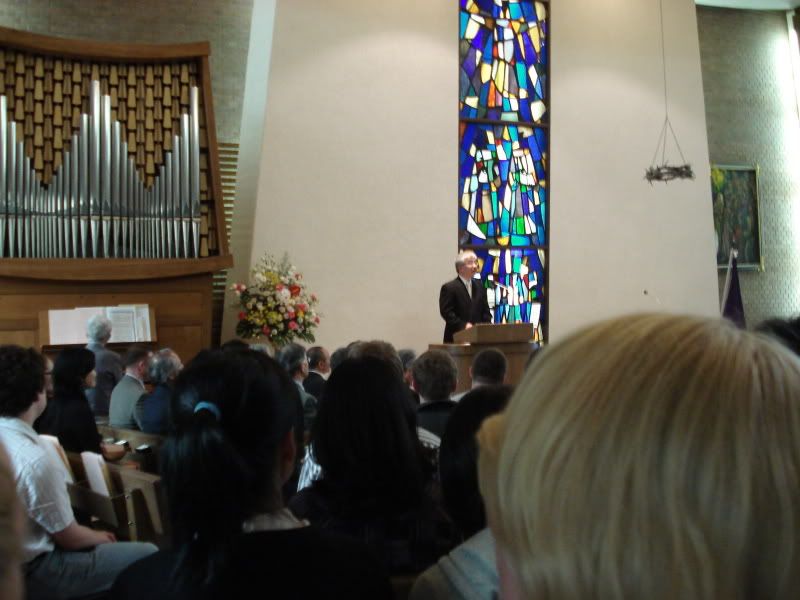
The religious matriculation ceremony in the College Chapel where we were reminded that Doshisha stands for CHRISTIANITY, LIBERALISM, INTERNATIONALISM, where a Japanese man who looked like a Bond villain joked that the only way to cure homesickness is to diligently study and we were assured how proud our parents are of us for being at Doshisha.


Going to get my 'Alien registration card', being told I could get a receipt for it, but because they were changing design I will have to wait a week to get it. They needed this at the phone shop to allow me to get a mobile - which, I will have to pay a cancellation fee at the end of the year if I choose not to get a prepay, but which will allow me cheap emails to non Softbank customers than the prepay option, though both include free emails to other Softbank customers - but obviously that does not include the fact that I am 19, hence legally a child in Japan, and therefore obviously requiring my Japanese student volunteer to adopt me. Long story short, I get my phone sometime next week and I am currently operating at 13% of maximum social capability.
On a slightly less sarcastic note, I didn't do brilliant on my placement test. I'm in group IV with a few other kids from Cambridge among others, some of my friends are in group V and VI. Group V would be a lot more preferable. Group IV expects us to know 800 kanji - the Chinese characters you need to know around 2000 of to read a newspaper - by the end of the year. It is intermediate, if not the beginning stages of intermediate Japanese. I've been at this level since halfway through my A2 year. I've improved only incrementally in the entire year I was studying at one of the best universities in the world. Incidentally, everyone from SOAS at Doshisha is in group VI or above. It's partly because I didn't revise at all for the placement test. It's partly because I'm rusty. It's partly because Cambridge provides no structure whatsoever for systematically learning vocabulary and characters and provides no tests until the end of the year. But frustratingly it is because I have not worked hard enough on my language skills and have been distracted by other interests, both academic and otherwise. This year I need to stop mixing metaphors and take the dictionary by its horns and take the last train to Studiesville.
The other frustrating thing about being in Group IV is that it really limits my choice of non-language papers I can sit. I thought I was going to be stuck doing Ikebana and British Popular Culture since the 70s. Fortunately, this is not the case, and here is where I get less stroppy. As part of the deal Cambridge has with Doshisha, that sees us getting significantly reduced tuition fees, we also get less credits to take classes with. In fact, once a specially negotiated dissertation workshop in the Spring term and extra language seminars are factored in, we only get three free non-language classes for the whole year. There are no classes I want to take that I can take as a level IV student. But at the start of the Spring term there will be another placement test where one can potentially move up to a higher group. This term I am taking no non-language classes at all. I can focus on getting good at Japanese and I will also have a lot of free time in which to read, write, explore Kyoto and campaign politically (Mr. Tadatoshi, the Deputy Director of the International Bureau of the JCP - is asking around the Kyoto office for someone to introduce me to, my friend in Tokyo has already given me the contact details of a Kyoto Komrade). Then next term, when I am to Japanese what Joseph Conrade was to English, I will be able to take Modern Japanese Literature, Japanese Dialects, and Japanese Politics, all taught in Japanese. So actually, as a great master of the Tea Ceremony once said "It's all Gravy".
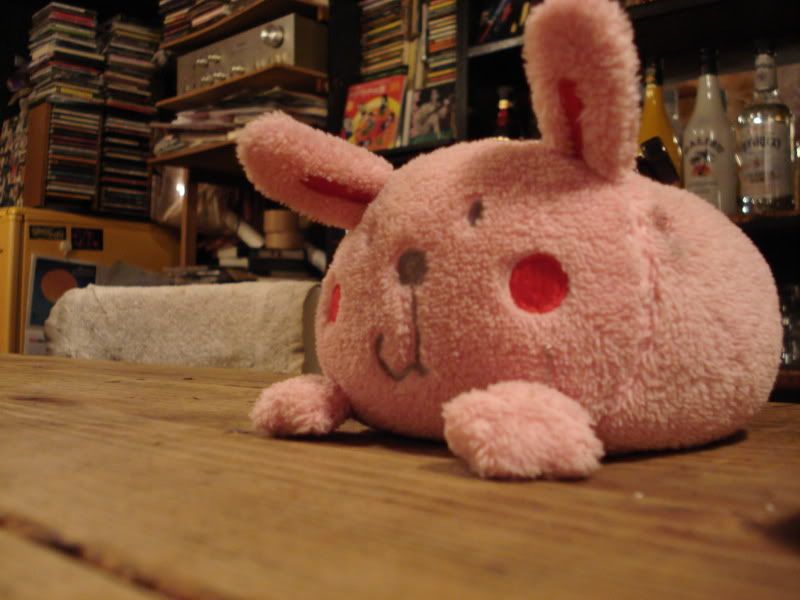
As for drinking, it was often. That's what Japanese sentences are like. I'm always surprised by how much better Japan is than everywhere else. I kind of mean that quite specifically but also kind of generally. Kyoto is not meant to be cool. AH KYOTO'S SO PRETTY SO TRADITIONAL TEMPLES GEISHA SAMURAI WABI SABI わね! That sort of thing. Osaka is cool. Osaka is where people drink and dance and dress well. But then you're reminded that the standards in Japan are just higher. Kyoto is comparatively not cool. But for that, it is absolutely packed with tiny hole-in-the-wall bars with loads of character, chatty barkeepers, good music and decently prices drinks. The average young person on a street in central Kyoto would be noticeably "fashionable" even by London standards. Japan, you're meant to be going through the worst recession of the last 50 years, you're meant to be stilted and repressed. You're doing it wrong! But yes, I've not been not drunk for quite a while. I'll keep you posted on how that's going. As for drinking, this it looks like.


Interlude - Between whisky and academic bureaucracy I have found Philip Larkin. That book has nearly all his poems at little over 200 pages. Which is nice. I really like it. Which worries me a bit. It's all very conservative. Both the poetry and its form - what's all the rhyming malarky! Away with your established metre! And the author and his politics - he's grumpy, perpetually old, his dad was a Nazi and his letters show him to be a wee bit reactionary. And I am worried because I hope I'm not a closet traditionalist. Like, alright, I love T.S. Elliot (fuck, he's a righty too!), but I prefer the comparatively normal The Love Song of J. Alfred Prufrock to The Waste Land, and it's shamefully appealing reading Larkin and easily understanding, you know, what he means. I'll have to get my weird fix when I'm done with a bit of e.e. cummings. The first poem of his I really dug was this rather lovely number:
The horns of the morning
Are blowing, are shining,
The meadows are bright
With the coldest dew;
The dawn reassembles.
Like the clash of gold cymbals
The sky spreads its vans out
The sun hands in view.
Here, where no love is,
All that was hopeless
And kept me from sleeping
Is frail and unsure;
For never so brilliant.
Neither so silent
Nor so unearthly, has
Earth grown before.
-------------
I might get sued, because I had to type that out because it's nowhere good on the internet. But yeah, it turns out this is a particularly chirpy piece for him, as by and large, he's a miserable bastard. But I rate him for his ability to create morbid beauty in mundane events. And I pity him, because he wrote extraordinary poetry and lived a tiny, tiny life.
Back to out main feature:
I've been missing certain people at home a lot. Though I've been having lots of fun and I've been very busy, my emotional baseline is still very up-and-down shaky. There's concrete stuff about wanting to see certain people at home, then lots of vague abstract stuff about where I even consider my home, not being settled, etc etc. So I've been doing lots of thinking about that. But it is, slowly dawning on me, that whatever I may feel about it, I am here for a year. I miss London and Cambridge, I miss people in London and Cambridge, but the only thing to do about it is to make Kyoto better than London and Cambridge, more of a home than home, to be move active and productive here than I am there, to make this year amazing. I must find a new ICA and Indego Cafe, and while not forgetting about those I care about at home, I must develop real, close relationships out here. To this end, well, for one I need to get a phone. But otherwise, I've been researching and seeing what Kyoto has to offer. Fortunately, it has a lot. I have found two art-house cinemas, over 10 art galleries, including a Kaleidoscope Museum (with a 'make your own kaleidoscope class, of course) and a gallery in a forest in the montains, infinite small cafes and bars, 4 hot springs, 1 local Communist Party Office, 3 local vegetarian restaurants including a "Felafal Garden", a few live houses with local acts and I live next door to the Imperial Palace with pleanty of grass and trees to lean against and read and write, and by the Kamo river with big grassy banks packed with people picnicking, studying, and playing live jazz.
On the agenda coming up I have two elections, one for the Kyoto Prefectur Governor, one for the Upper House in the Diet.
A bit nearer - and here I'm partially doing this to have it all written up for nice, easy reference - I have
22.09.09 - Welcome to Doshisha Party
29.09.09 - Mama!milk, A great Kyoto band (check out 'Kujaku') who do atmospheric accordion jazz - at Urbanguild.
04.10.09 - Japan's largest vegetarian festival at Okazaki Park - it's bring your own cutlery.
24.10-09-23.12.09 - Gustav Klimt and Egon Schiele and Viennese Art at the turn of the century exhibition at the Suntory Museum in Osaka. What! Having first become aware of their existence a few months ago, slightly lamenting not being able to go to Vienna before I left for Japan, it's now down the road. Marvelous.
That and looking for a job. So yes, I am going to intensely enjoyable activity myself out of the blues.
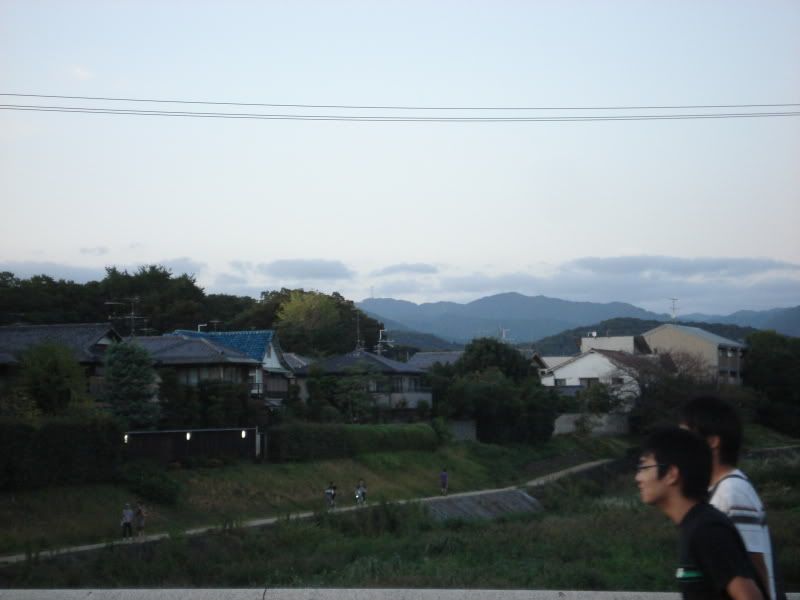
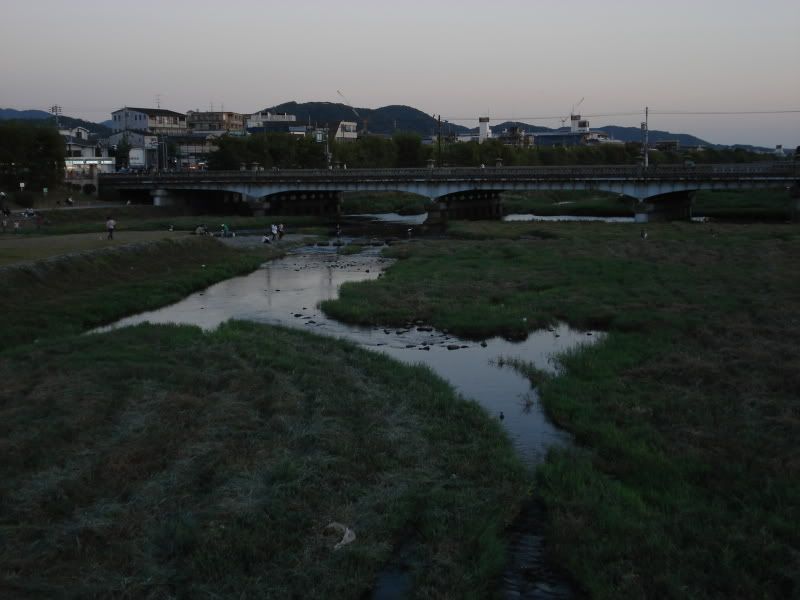
And then here are some pictures, for good measure.
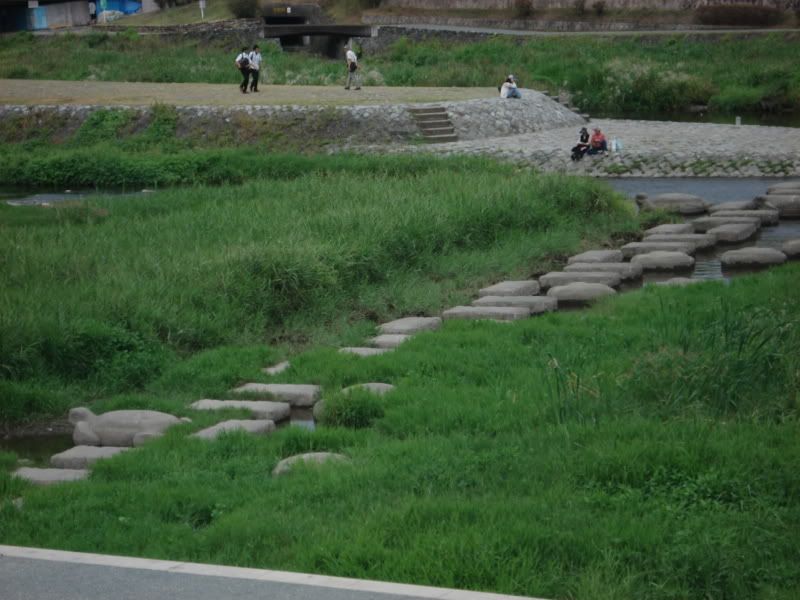
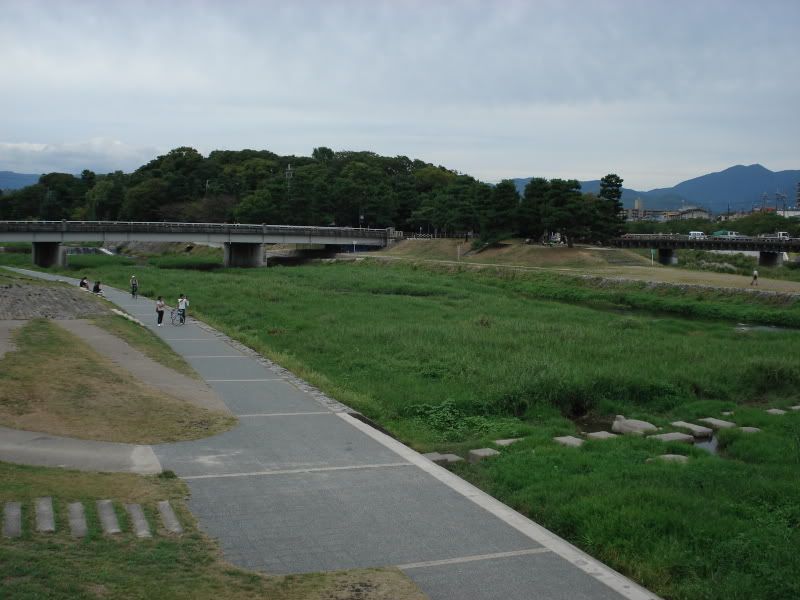
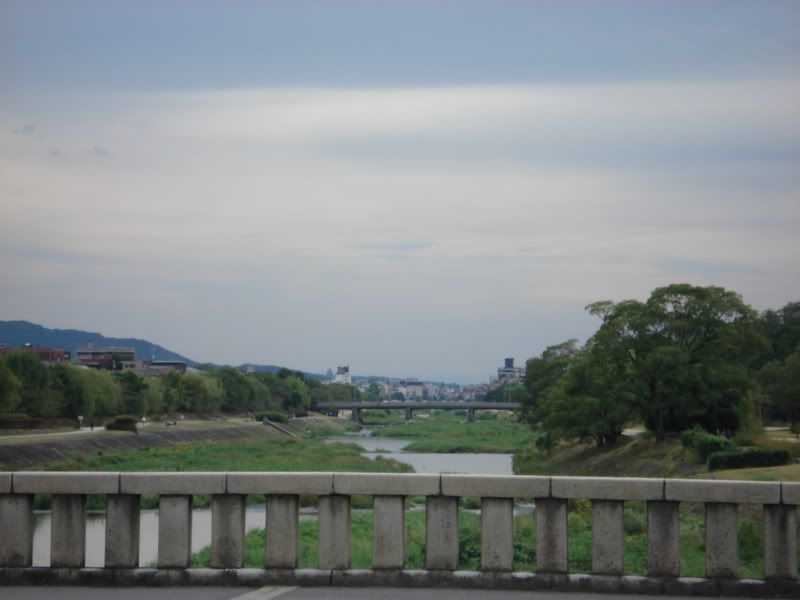
Pretty river views.


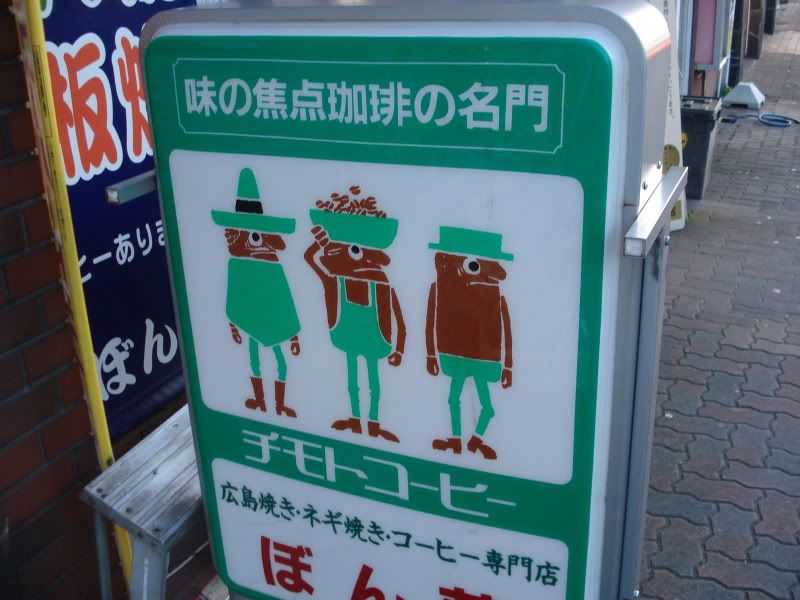
A good sign.

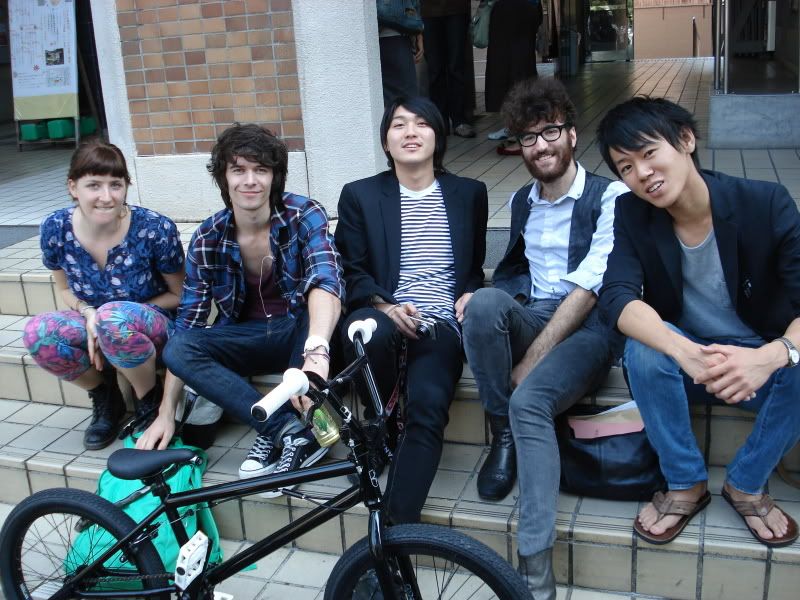
Looking like American college students.

Take care, I'll maybe write more frequently now. But Oh My Days, I swear down, you have to comment this. This took me three hours to write.
Night night
xxx
I'm trying to think of how to break the last week or so down. What's my essay structure? Got it.
General happenings:
If I was a terrible person I would describe this last week as "work hard, play hard". But I won't. In the days I've mostly been doing orientation stuff. In the nights I've mostly been doing drinking stuff.
Orientation consists in large parts of the international faculty packing into a lecture hall, being handed fliers and sheets, and then having the fliers and sheets read out to us for the next hour or so. So amongst such thrills as these, if I were forced to choose the keepiest of keepers the best of Orientation Week might include:
The religious matriculation ceremony in the College Chapel where we were reminded that Doshisha stands for CHRISTIANITY, LIBERALISM, INTERNATIONALISM, where a Japanese man who looked like a Bond villain joked that the only way to cure homesickness is to diligently study and we were assured how proud our parents are of us for being at Doshisha.
Going to get my 'Alien registration card', being told I could get a receipt for it, but because they were changing design I will have to wait a week to get it. They needed this at the phone shop to allow me to get a mobile - which, I will have to pay a cancellation fee at the end of the year if I choose not to get a prepay, but which will allow me cheap emails to non Softbank customers than the prepay option, though both include free emails to other Softbank customers - but obviously that does not include the fact that I am 19, hence legally a child in Japan, and therefore obviously requiring my Japanese student volunteer to adopt me. Long story short, I get my phone sometime next week and I am currently operating at 13% of maximum social capability.
On a slightly less sarcastic note, I didn't do brilliant on my placement test. I'm in group IV with a few other kids from Cambridge among others, some of my friends are in group V and VI. Group V would be a lot more preferable. Group IV expects us to know 800 kanji - the Chinese characters you need to know around 2000 of to read a newspaper - by the end of the year. It is intermediate, if not the beginning stages of intermediate Japanese. I've been at this level since halfway through my A2 year. I've improved only incrementally in the entire year I was studying at one of the best universities in the world. Incidentally, everyone from SOAS at Doshisha is in group VI or above. It's partly because I didn't revise at all for the placement test. It's partly because I'm rusty. It's partly because Cambridge provides no structure whatsoever for systematically learning vocabulary and characters and provides no tests until the end of the year. But frustratingly it is because I have not worked hard enough on my language skills and have been distracted by other interests, both academic and otherwise. This year I need to stop mixing metaphors and take the dictionary by its horns and take the last train to Studiesville.
The other frustrating thing about being in Group IV is that it really limits my choice of non-language papers I can sit. I thought I was going to be stuck doing Ikebana and British Popular Culture since the 70s. Fortunately, this is not the case, and here is where I get less stroppy. As part of the deal Cambridge has with Doshisha, that sees us getting significantly reduced tuition fees, we also get less credits to take classes with. In fact, once a specially negotiated dissertation workshop in the Spring term and extra language seminars are factored in, we only get three free non-language classes for the whole year. There are no classes I want to take that I can take as a level IV student. But at the start of the Spring term there will be another placement test where one can potentially move up to a higher group. This term I am taking no non-language classes at all. I can focus on getting good at Japanese and I will also have a lot of free time in which to read, write, explore Kyoto and campaign politically (Mr. Tadatoshi, the Deputy Director of the International Bureau of the JCP - is asking around the Kyoto office for someone to introduce me to, my friend in Tokyo has already given me the contact details of a Kyoto Komrade). Then next term, when I am to Japanese what Joseph Conrade was to English, I will be able to take Modern Japanese Literature, Japanese Dialects, and Japanese Politics, all taught in Japanese. So actually, as a great master of the Tea Ceremony once said "It's all Gravy".
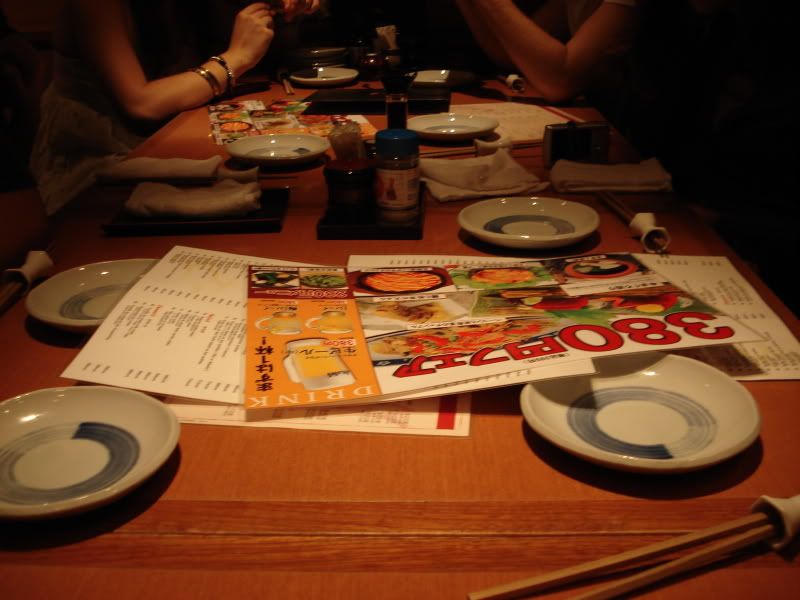
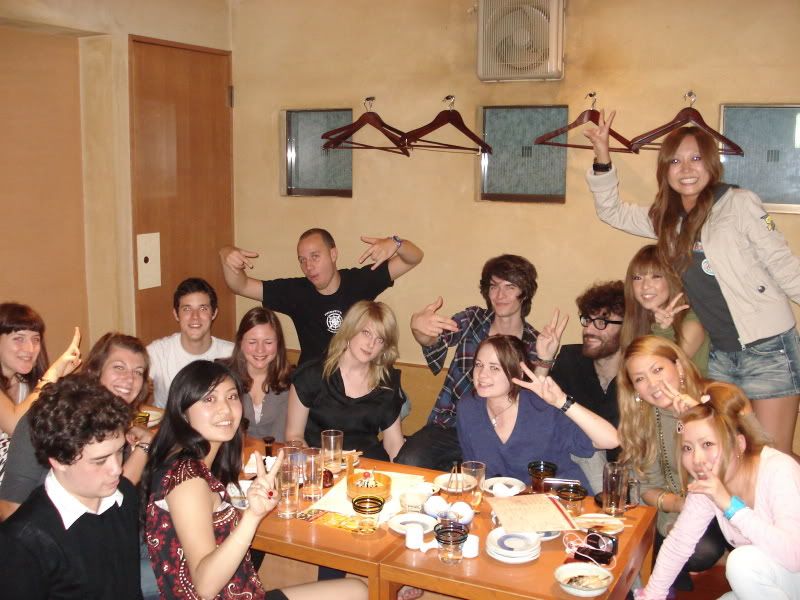
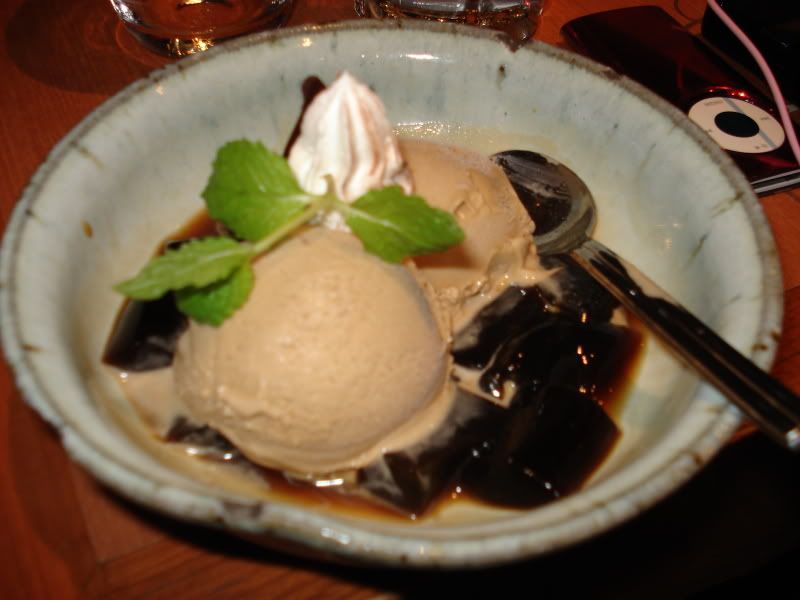
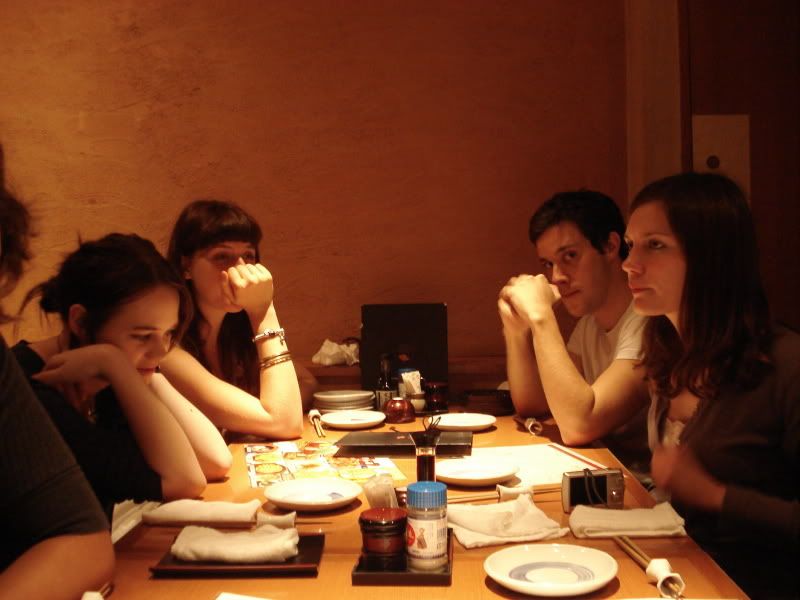
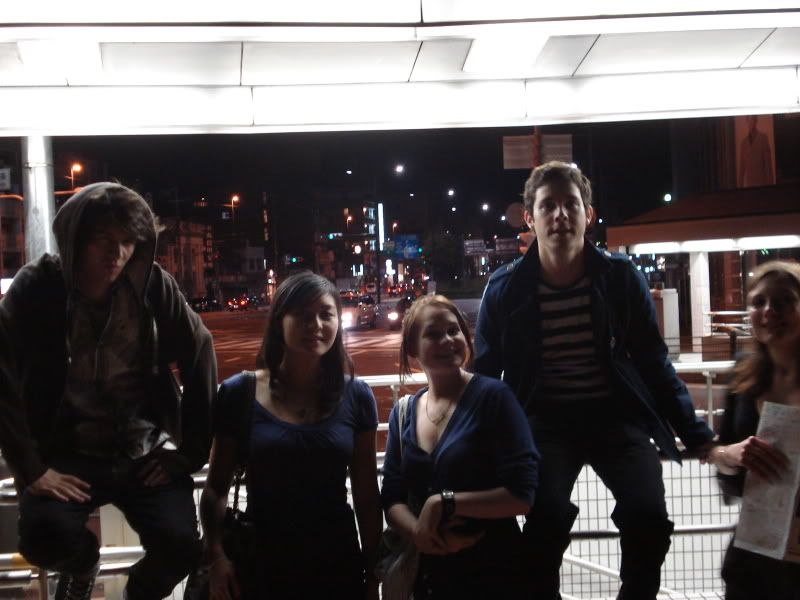
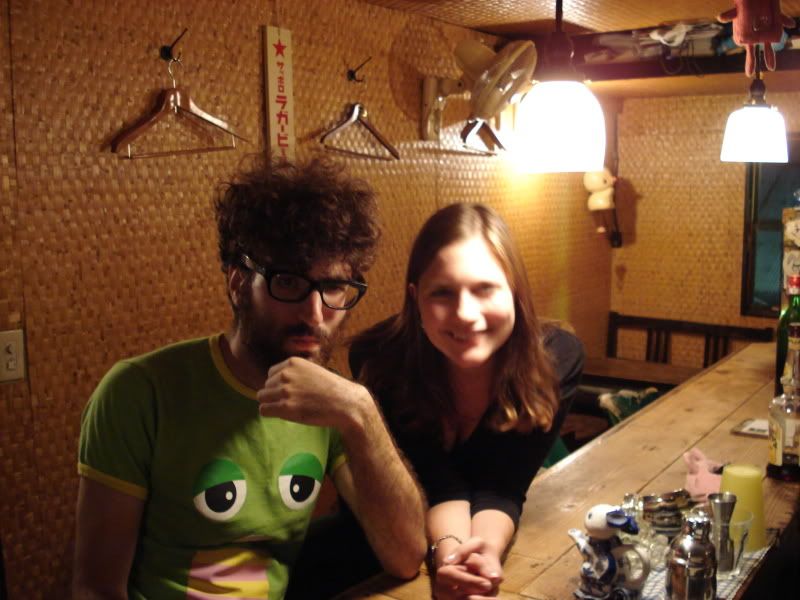
As for drinking, it was often. That's what Japanese sentences are like. I'm always surprised by how much better Japan is than everywhere else. I kind of mean that quite specifically but also kind of generally. Kyoto is not meant to be cool. AH KYOTO'S SO PRETTY SO TRADITIONAL TEMPLES GEISHA SAMURAI WABI SABI わね! That sort of thing. Osaka is cool. Osaka is where people drink and dance and dress well. But then you're reminded that the standards in Japan are just higher. Kyoto is comparatively not cool. But for that, it is absolutely packed with tiny hole-in-the-wall bars with loads of character, chatty barkeepers, good music and decently prices drinks. The average young person on a street in central Kyoto would be noticeably "fashionable" even by London standards. Japan, you're meant to be going through the worst recession of the last 50 years, you're meant to be stilted and repressed. You're doing it wrong! But yes, I've not been not drunk for quite a while. I'll keep you posted on how that's going. As for drinking, this it looks like.
Interlude - Between whisky and academic bureaucracy I have found Philip Larkin. That book has nearly all his poems at little over 200 pages. Which is nice. I really like it. Which worries me a bit. It's all very conservative. Both the poetry and its form - what's all the rhyming malarky! Away with your established metre! And the author and his politics - he's grumpy, perpetually old, his dad was a Nazi and his letters show him to be a wee bit reactionary. And I am worried because I hope I'm not a closet traditionalist. Like, alright, I love T.S. Elliot (fuck, he's a righty too!), but I prefer the comparatively normal The Love Song of J. Alfred Prufrock to The Waste Land, and it's shamefully appealing reading Larkin and easily understanding, you know, what he means. I'll have to get my weird fix when I'm done with a bit of e.e. cummings. The first poem of his I really dug was this rather lovely number:
The horns of the morning
Are blowing, are shining,
The meadows are bright
With the coldest dew;
The dawn reassembles.
Like the clash of gold cymbals
The sky spreads its vans out
The sun hands in view.
Here, where no love is,
All that was hopeless
And kept me from sleeping
Is frail and unsure;
For never so brilliant.
Neither so silent
Nor so unearthly, has
Earth grown before.
-------------
I might get sued, because I had to type that out because it's nowhere good on the internet. But yeah, it turns out this is a particularly chirpy piece for him, as by and large, he's a miserable bastard. But I rate him for his ability to create morbid beauty in mundane events. And I pity him, because he wrote extraordinary poetry and lived a tiny, tiny life.
Back to out main feature:
I've been missing certain people at home a lot. Though I've been having lots of fun and I've been very busy, my emotional baseline is still very up-and-down shaky. There's concrete stuff about wanting to see certain people at home, then lots of vague abstract stuff about where I even consider my home, not being settled, etc etc. So I've been doing lots of thinking about that. But it is, slowly dawning on me, that whatever I may feel about it, I am here for a year. I miss London and Cambridge, I miss people in London and Cambridge, but the only thing to do about it is to make Kyoto better than London and Cambridge, more of a home than home, to be move active and productive here than I am there, to make this year amazing. I must find a new ICA and Indego Cafe, and while not forgetting about those I care about at home, I must develop real, close relationships out here. To this end, well, for one I need to get a phone. But otherwise, I've been researching and seeing what Kyoto has to offer. Fortunately, it has a lot. I have found two art-house cinemas, over 10 art galleries, including a Kaleidoscope Museum (with a 'make your own kaleidoscope class, of course) and a gallery in a forest in the montains, infinite small cafes and bars, 4 hot springs, 1 local Communist Party Office, 3 local vegetarian restaurants including a "Felafal Garden", a few live houses with local acts and I live next door to the Imperial Palace with pleanty of grass and trees to lean against and read and write, and by the Kamo river with big grassy banks packed with people picnicking, studying, and playing live jazz.
On the agenda coming up I have two elections, one for the Kyoto Prefectur Governor, one for the Upper House in the Diet.
A bit nearer - and here I'm partially doing this to have it all written up for nice, easy reference - I have
22.09.09 - Welcome to Doshisha Party
29.09.09 - Mama!milk, A great Kyoto band (check out 'Kujaku') who do atmospheric accordion jazz - at Urbanguild.
04.10.09 - Japan's largest vegetarian festival at Okazaki Park - it's bring your own cutlery.
24.10-09-23.12.09 - Gustav Klimt and Egon Schiele and Viennese Art at the turn of the century exhibition at the Suntory Museum in Osaka. What! Having first become aware of their existence a few months ago, slightly lamenting not being able to go to Vienna before I left for Japan, it's now down the road. Marvelous.
That and looking for a job. So yes, I am going to intensely enjoyable activity myself out of the blues.
And then here are some pictures, for good measure.
Pretty river views.

A good sign.
Looking like American college students.
Take care, I'll maybe write more frequently now. But Oh My Days, I swear down, you have to comment this. This took me three hours to write.
Night night
xxx
Subscribe to:
Posts (Atom)

